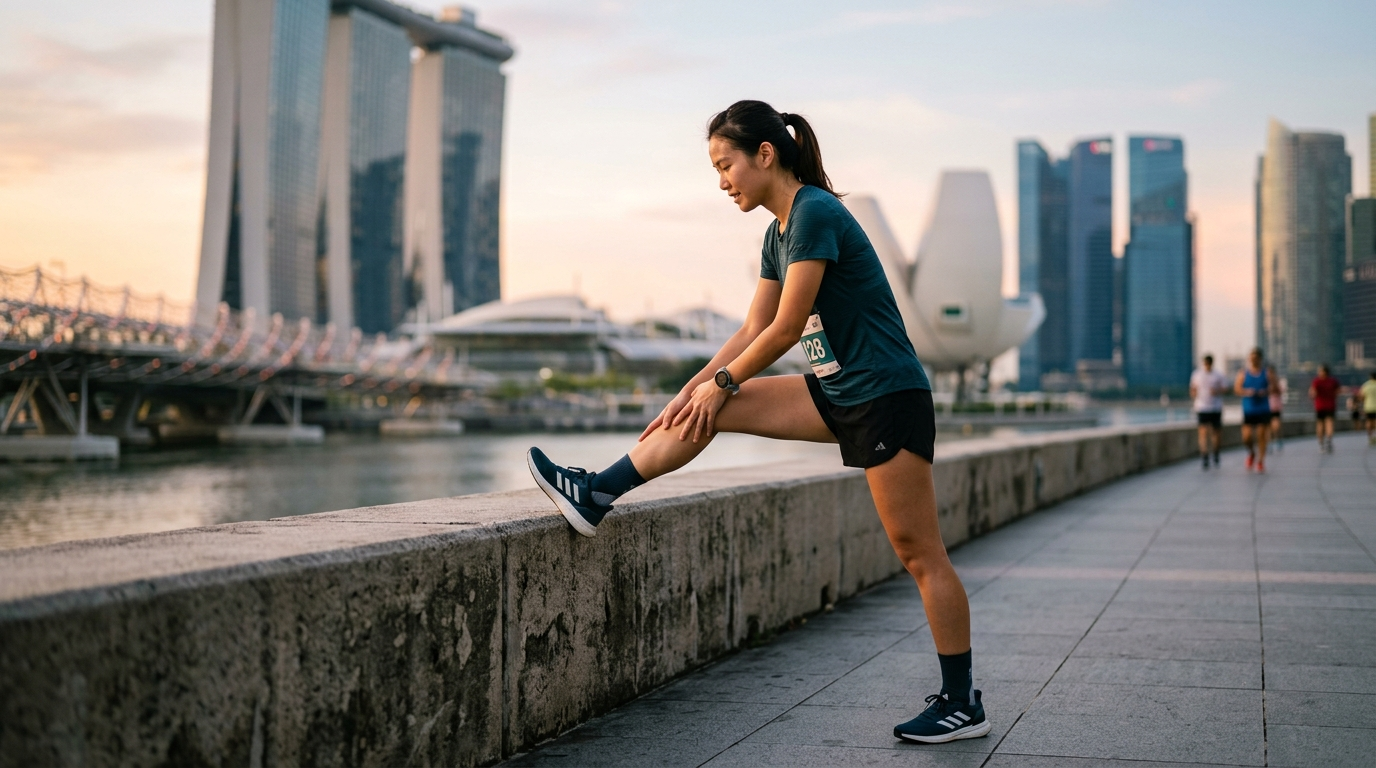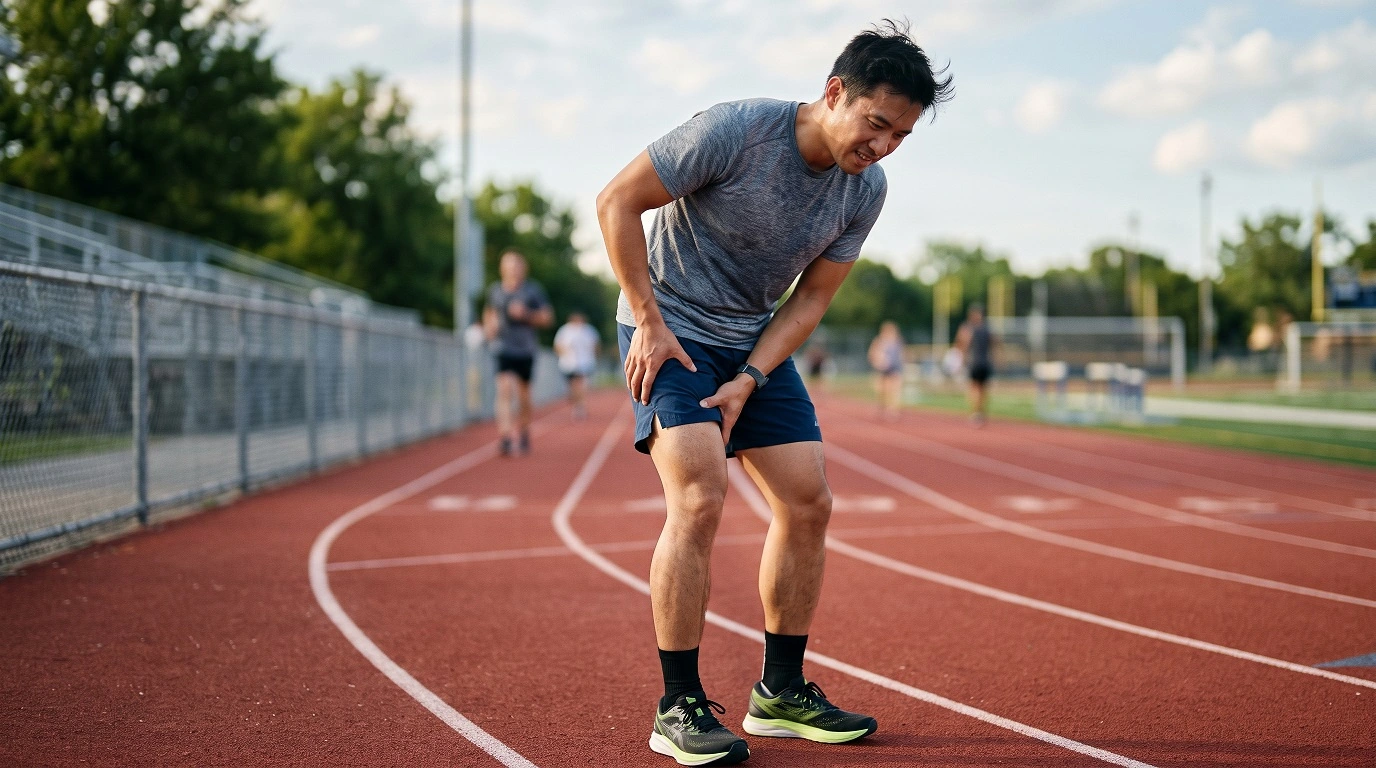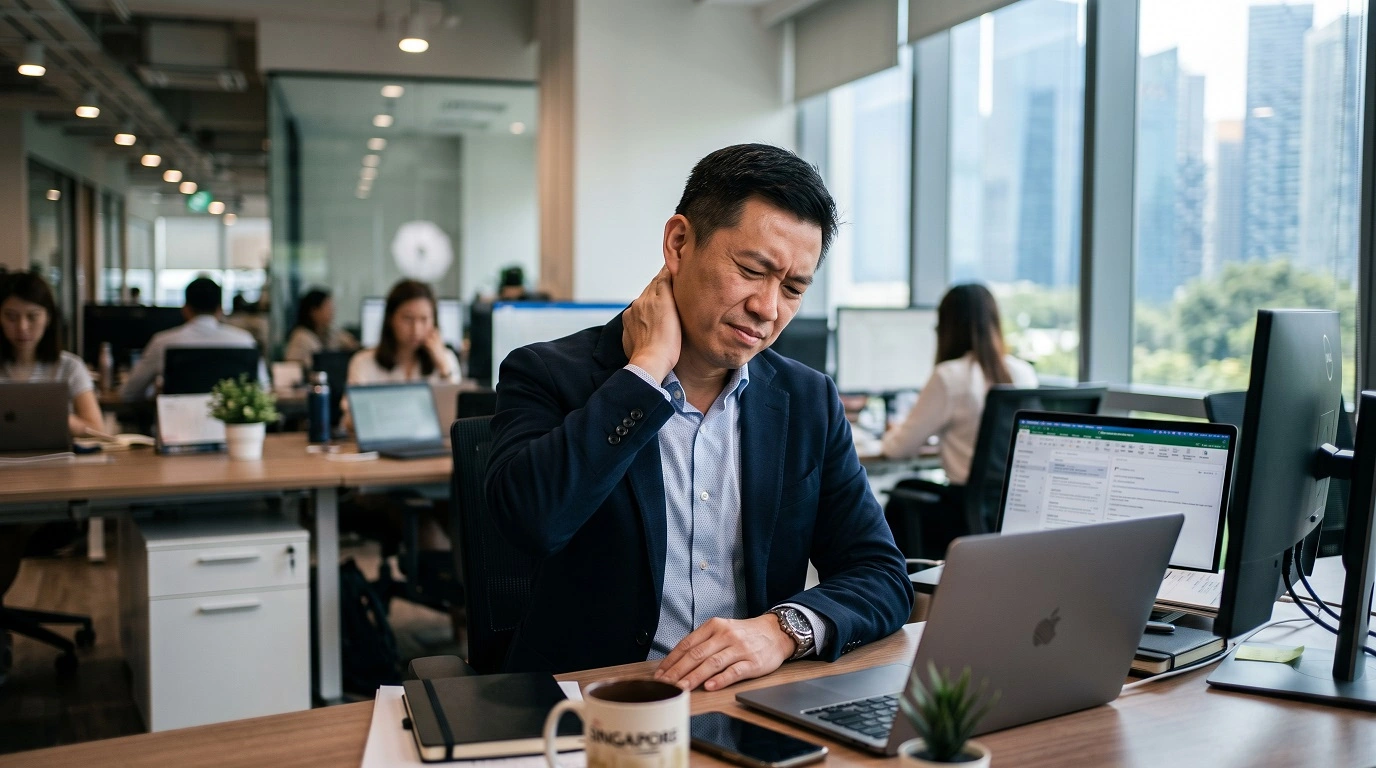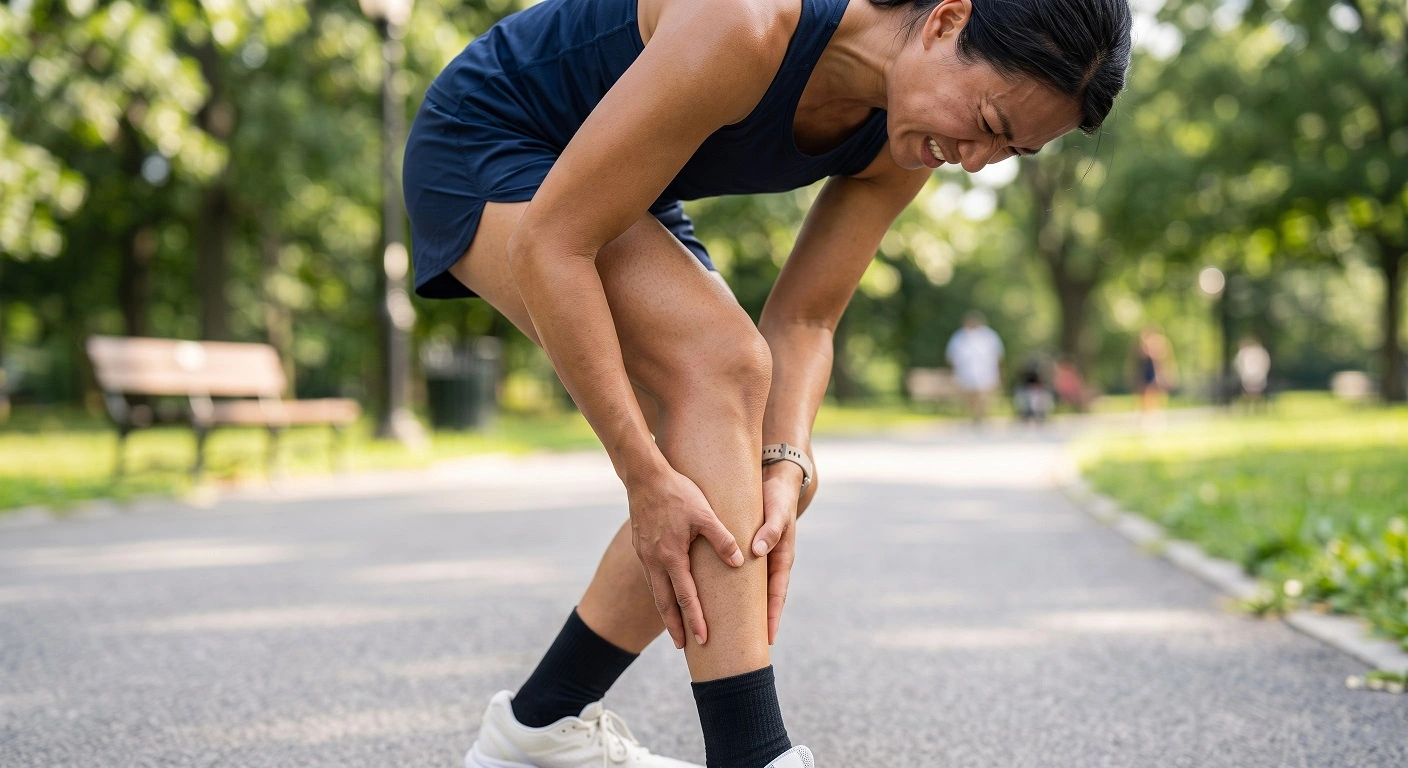
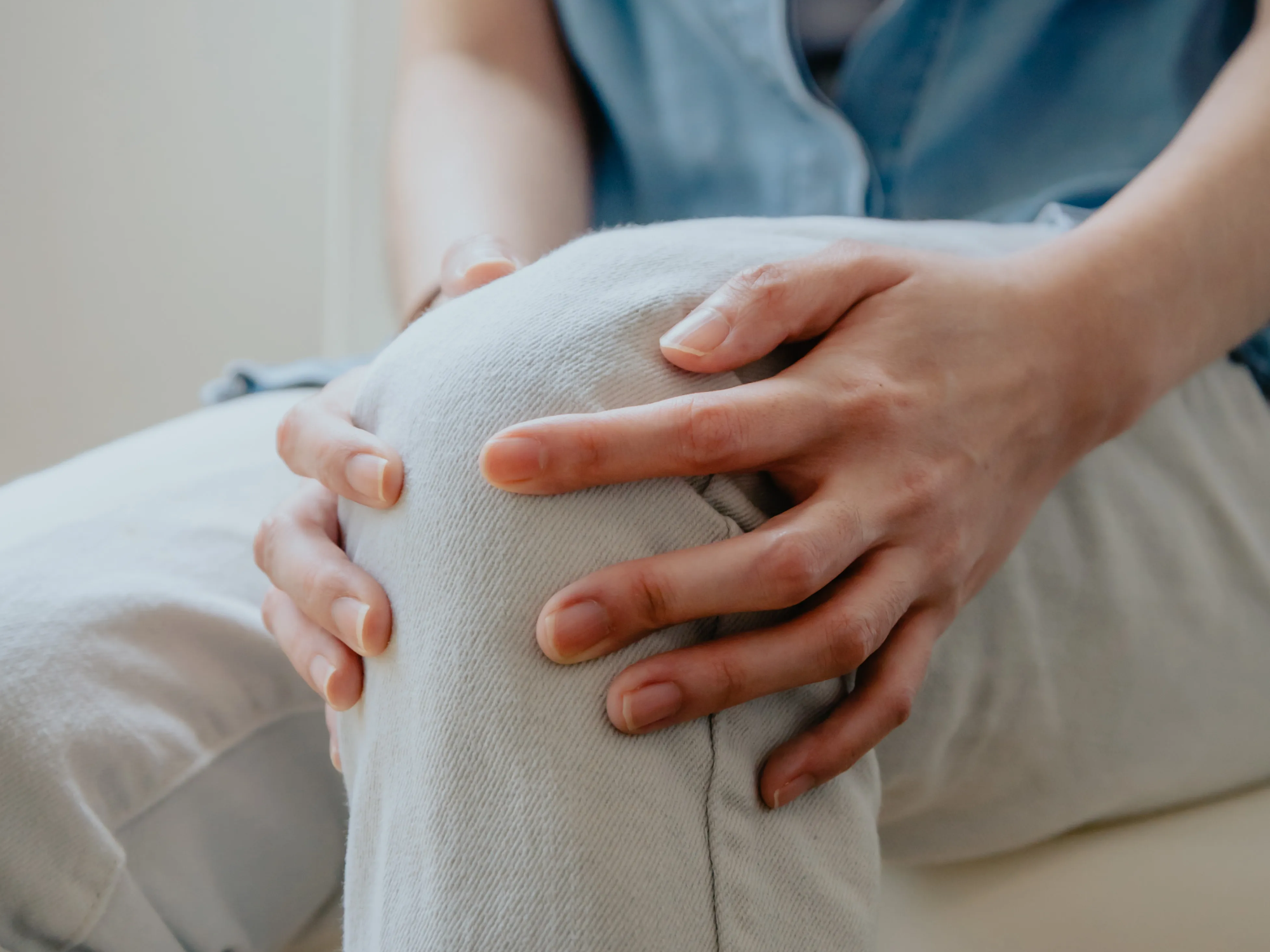
You just finished a solid 5km loop around Marina Bay. As you slow to a walk, that familiar ache in your knee flares up. Knee pain after running typically stems after running involves looking at your gait, footwear, and spinal alignment. Identifying the type of ache helps find the right chiropractic or rehab approach. It can help get you back on your feet.
What Causes Knee Pain After Running? (The Biomechanical Root)
Understanding the exact cause of your joint ache is the first step to proper recovery. Common culprits include improper kneecap tracking, friction on the outer knee, and failing to rest between intensive workouts.
Runner’s Knee (PFPS) and Patellar Tracking
Patellofemoral Pain Syndrome is also called Runner’s Knee.
It happens when the kneecap (patella) does not move smoothly in the groove of the thigh bone.
This leads to a dull, persistent ache. In our local context, we often see this linked to overpronation or flat feet. When your arches collapse, it forces the shin to rotate inward, which pulls the kneecap out of alignment.
IT Band Syndrome: Why Your Outer Knee Stings
If you feel a sharp, stinging sensation on the side of your knee, it’s likely the Iliotibial (IT) band. This thick band of tissue runs from your hip to your knee. If your pelvis tilts or your glutes weaken, your IT band tightens and rubs against your knee bone. A lazy hip or a misaligned lower back is often the cause of the knee becoming the victim.
Overuse and Overtraining in Singapore’s Tropical Climate
We often push ourselves too hard during the cooler early mornings or late evenings. However, running exclusively on hard PCN concrete without adequate recovery can lead to aching knees after exercise. The repetitive impact travels straight up the leg, and if you don’t stack your joints correctly, your cartilage absorbs the brunt of the force.
What are the Symptoms of Knee Pain After Running?
Recognising your pain type and location helps you decide what is wrong.
It can show a simple muscle strain or a structural issue needing professional help. Symptoms can range from a mild annoyance to a sharp warning sign that stops you mid-stride.
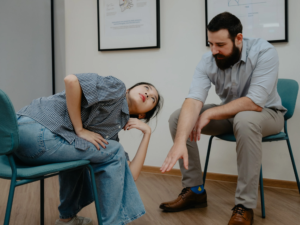
Identifying Localised vs. Diffuse Pain
| Pain Location | Probable Cause | Sensations Felt |
|---|---|---|
| Front / Behind Kneecap | Runner’s Knee (PFPS) | Dull, aching, worse when climbing stairs |
| Outside of Knee | IT Band Syndrome | Sharp, stinging, burning during movement |
| Back / Inside of Knee | Hamstring strain, Bursitis | Tightness, swelling, tender to touch |
Red Flags: When It’s More Than Just a Runners Aches
Some symptoms warrant prompt assessment rather than a wait-and-see approach:
- A pop heard or felt at the moment of injury
- The knee locking, giving way, or feeling unstable
- Swelling appearing within hours of running
- Pain that persists beyond two weeks despite rest
Morning Stiffness and Post-Workout Soreness
One telling sign of PFPS is the Moviegoer’s Sign. After sitting through a long meeting or film, standing up produces a sharp, achy pain behind the kneecap that eases after a few steps. If this sounds familiar, it is worth having your knee assessed rather than attributing it to general tiredness.
How Chiropractic Care Can Help with Knee Pain After Running
Chiropractic care approaches knee pain not as an isolated joint problem, but as part of a connected movement system. The goal is to identify and address the source, not just manage the symptom. Runners follow the same pattern as everyone else: how chiropractors treat knee pain begins with a gait and movement check, then combines joint mobilisation, soft tissue work and a strengthening plan.
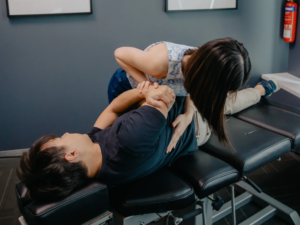
Beyond the Knee: The Hip-Knee-Ankle Connection
A chiropractor assessing side knee pain after running will look well beyond the knee itself. Pelvic tilts, lumbar restrictions, and even ankle stiffness can alter how force travels through the leg with each stride. Addressing these upstream factors is often what produces lasting relief.
Manual Adjustments and Joint Mobilisation
Chiropractic adjustments to the hip and lower back may help restore joint mechanics.
They may also reduce pressure on the patella. Improved alignment helps the kneecap track better, which can reduce pain and inflammation during and after running.
Soft Tissue Therapy for ITB and Muscle Imbalances
Addressing tightness in the quads, hamstrings, and IT band helps reduce the strain placed on the knees. Releasing these tissues alongside joint work tends to produce better outcomes than either approach alone.
How to Run Without Hurting Your Knees: Prevention Tips
Preventing knee pain involves a mix of better mechanics and smarter recovery. You don’t necessarily need to stop running; you likely just need to change how you run and what you wear while doing it.
- Shorten your stride: High cadence (more steps per minute) reduces the impact on each hit.
- Warm up dynamically: Skip the static stretching; use leg swings and glute bridges instead.
- Pay attention to subtle signs: Don’t ignore your aches until it’s serious. If you feel any discomfort, take a break for a day.”
Frequently Asked Questions About Knee Pain After Running
Is it okay to run with a slight knee ache?
A useful guideline: if pain rates below a 3 out of 10 during running and disappears within an hour after stopping, light running may be acceptable. If pain increases as you run, or lingers for hours afterwards, switching to low-impact activity like cycling or swimming is the more sensible approach while the knee settles.
How long does it take for runner’s knee to heal with chiropractic care?
Recovery timelines vary depending on how long the problem has persisted and how consistently you follow the treatment. Mild cases may respond within four to six weeks. Chronic or recurring cases often take longer and may require ongoing rehab exercises alongside in-clinic care. Realistic expectations from the outset tend to lead to better outcomes.
Can chiropractic care help with back of knee pain or inside knee pain?
It may, depending on the cause. Pain at the back of the knee can sometimes relate to a Baker’s cyst, which is a fluid-filled swelling often associated with underlying joint inflammation. Inner knee pain may point toward Pes Anserine Bursitis, particularly common in runners with overpronation. Both respond differently to treatment, which is why a proper assessment matters before you implement any plan.
Ready to address your knee pain? Book a consultation to explore whether chiropractic care might be the right approach for your specific situation.