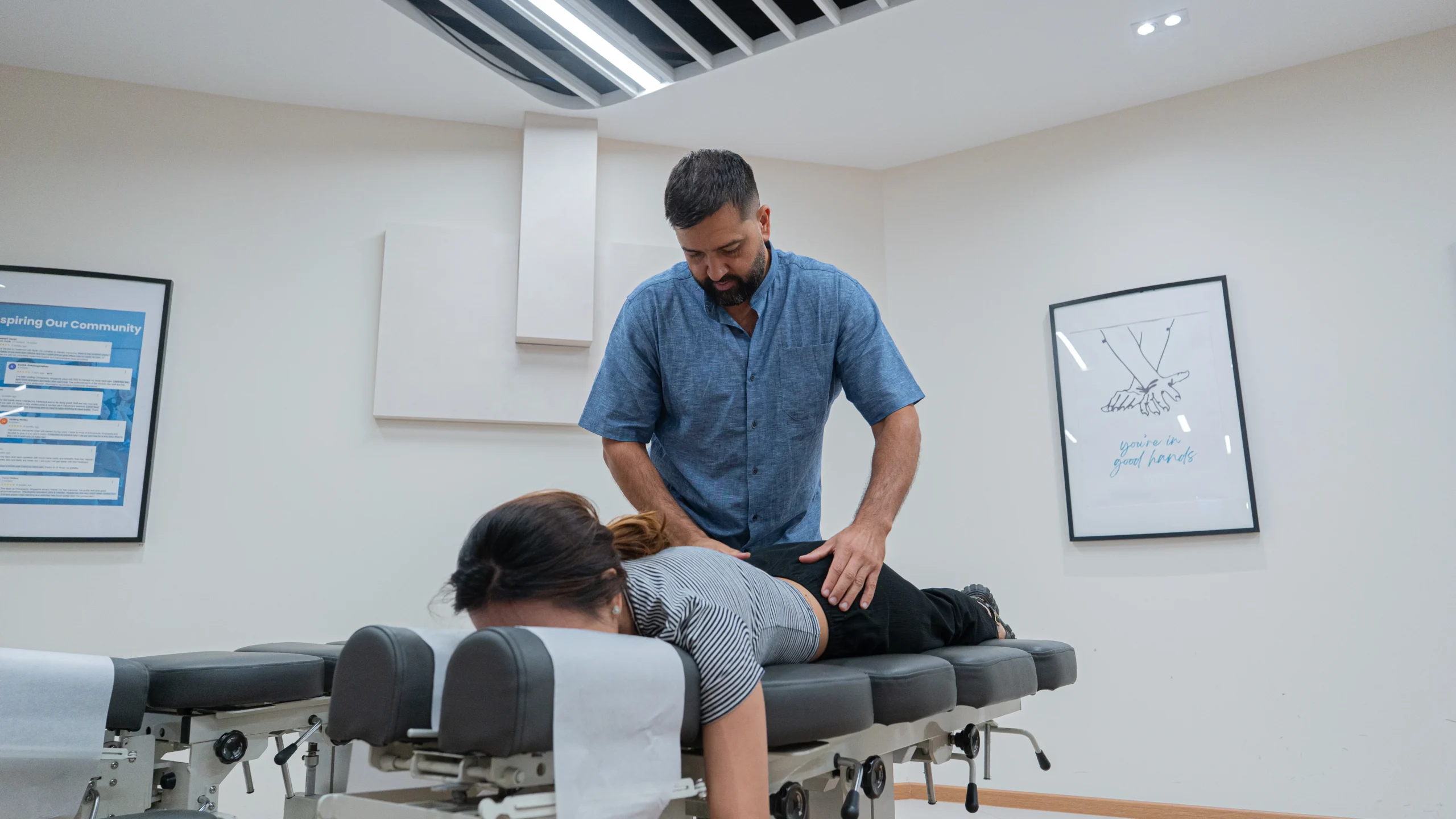
Most knee pain that doesn’t come from a recent injury comes from how load travels through your hips, knees, and feet, and that is what a chiropractor assesses and treats. Treatment usually combines hands-on joint work, soft tissue work, and a home strengthening plan for your thighs and hips. The strengthening does most of the long-term work, and hands-on care makes those exercises easier to do. A knee that locks, gives way, swells fast after an injury, or can’t take your weight needs a doctor before any chiropractic care.
If you have wondered how chiropractors treat knee pain, the short answer is that they look well beyond the knee. A sharp twinge on the stairs at Raffles Place MRT or a dull ache after a run along East Coast Park often starts with a stiff ankle, a weak hip, or the habit of loading one leg more than the other. Finding that source decides what comes first: hands-on care, exercise, or a referral to a doctor.
Which Knee Problems Can a Chiropractor in Singapore Help With?
Chiropractors mainly help with knee pain that comes from how the joint moves and carries load, not from a tear or a break. The most common cases are:
- Runner’s knee: an ache around or behind the kneecap that flares on stairs, when squatting, or after long runs. Knee pain after running usually traces back to a sudden jump in mileage, weak hips, or a stiff ankle rather than the knee itself.
- Pain when bending or squatting: a sharp pinch or dull ache as you squat. Knee pain when bending often comes from the kneecap not gliding smoothly in its groove, or from early cartilage wear that feels stiffest first thing in the morning.
- Patellar tendon irritation: pain just below the kneecap from repeated jumping or running.
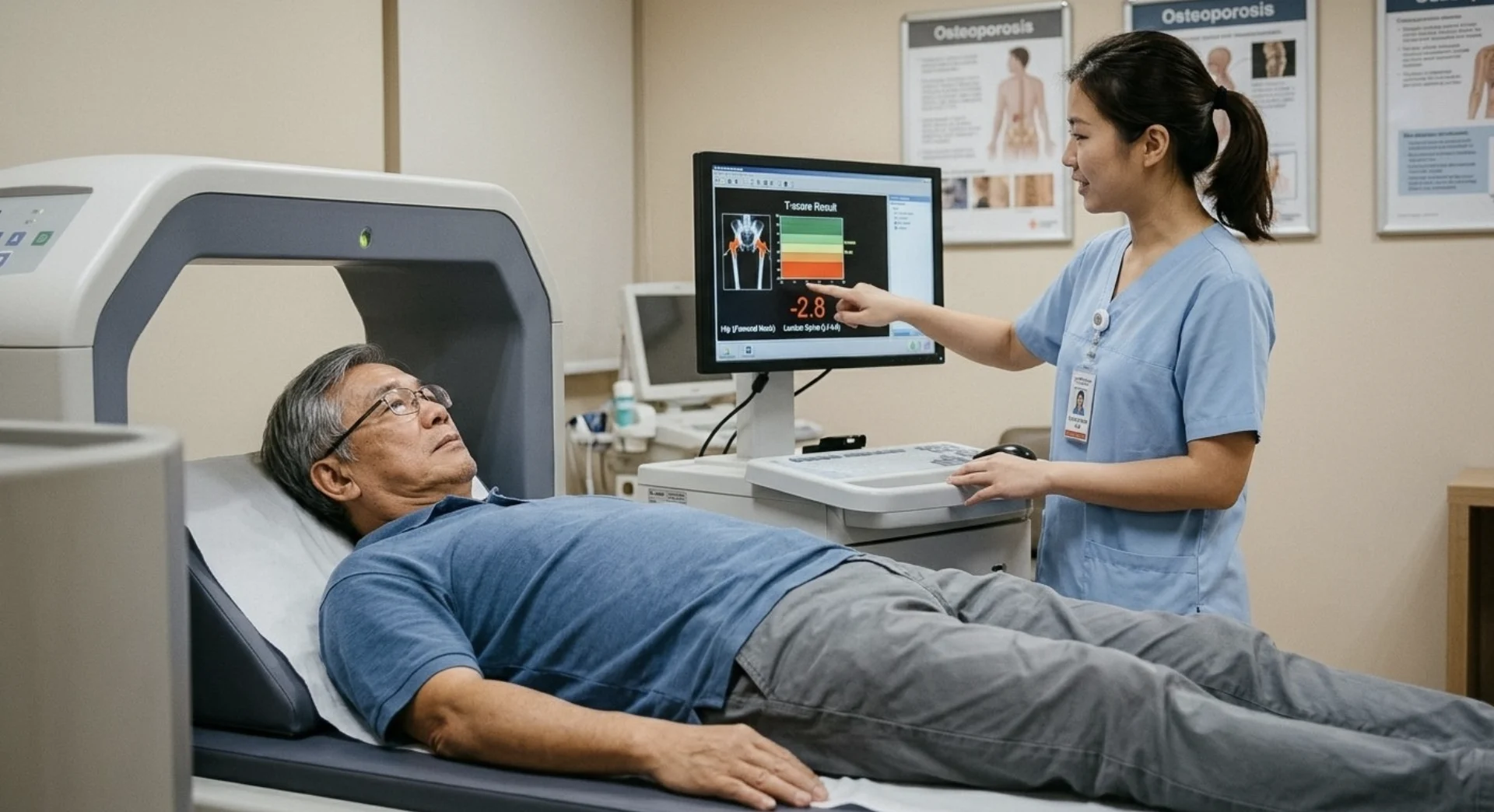
- Early knee osteoarthritis: stiffness and a dull ache, usually worst first thing in the morning. Care can’t reverse joint wear, but it can make moving and exercising easier. UK NICE guidance on osteoarthritis recommends exercise for everyone with the condition and considers manual therapy only alongside it.
What Happens During a Chiropractic Knee Assessment?
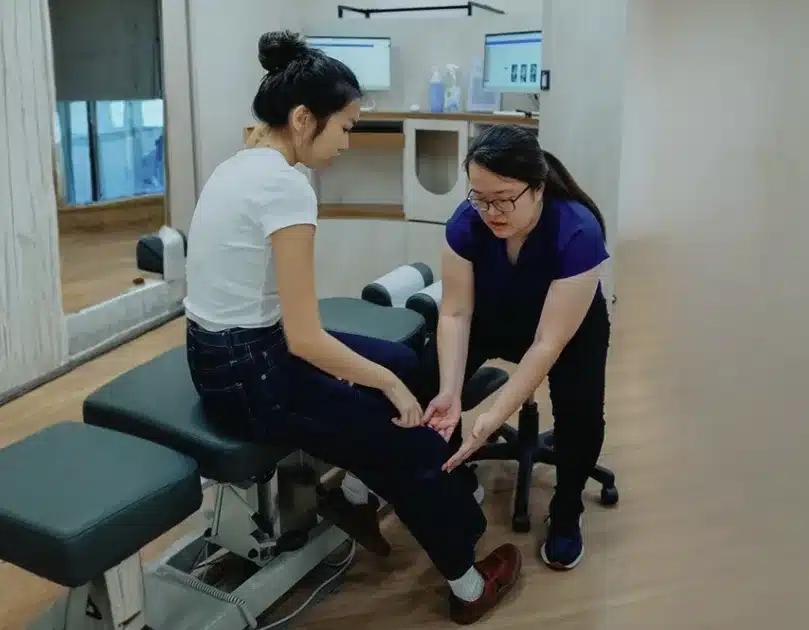
A chiropractic knee assessment starts with how you move, not with the knee itself.
Full-Body Movement Check
A practitioner will watch you walk, check your posture, and test how well your hips, ankles, and lower back move. This shows why one knee may be taking more load than it should.
When Is a Scan Needed?
Bring any X-ray or MRI reports you already have. If we suspect a fracture, a serious ligament injury, or a torn meniscus, we’ll refer you for imaging before any hands-on treatment.
When Should You See a Doctor First?
See a doctor before chiropractic care if:
- Your knee locks, catches, or gives way
- It swelled within a few hours of a twist, fall, or pop
- You can’t put weight on the leg
- The joint is hot, red, and swollen, or you have a fever
Should You Worry About Knee Clicking?
Clicking without pain or swelling is usually harmless and often comes from soft tissue moving over the joint. Get it checked if it comes with pain, swelling, locking, or a feeling that the knee might give way. Frequent grinding is also linked to a higher risk of knee osteoarthritis later, which is another reason to keep your thigh and hip muscles strong.
What Chiropractic Techniques Help with Knee Pain?
Chiropractic knee care usually combines three hands-on methods, each aimed at a different part of the problem.
Knee Joint Mobilisation
This is slow, rhythmic movement of the joint, not the quick “crack” most people picture from a spinal adjustment. The practitioner gently glides the kneecap and moves the shin bone against the thigh bone, staying within what feels comfortable. It suits a knee that feels stiff, especially first thing in the morning or after sitting. It isn’t used on a hot, freshly swollen joint, and it works best when followed by the strengthening exercises it makes easier.
Hip, Pelvis and Lower Back Care
Weak or stiff hips are one of the most common reasons a knee gets overloaded. When your hip muscles can’t control the thigh, it drifts inwards as you step, squat or land, and the kneecap takes the strain. Research on kneecap pain shows that strengthening the hips as well as the knee reduces pain more than knee exercises alone. That’s why a knee appointment often includes work on your hips and lower back.
Soft Tissue Work
Tight thigh and hip muscles change how the kneecap moves. Soft tissue work uses firm, steady pressure on the quadriceps, the calf, and the hip muscles that pull on the iliotibial band, the tough band down the outside of the thigh. The band itself is too stiff to stretch or release, so treatment targets the muscles attached to it. Expect some tenderness during treatment and mild soreness for a day or two afterwards.
What Can You Do at Home to Support Knee Recovery?
Strengthening your thigh and hip muscles does more for long-term knee health than any single treatment session.
- Strengthen the whole front of the thigh and your glutes. Squats to a chair, step-ups, and glute bridges are common starting points. Research doesn’t support exercises that try to isolate the small inner thigh muscle on its own.
- Break up long sitting. Stand and move every 30 to 45 minutes, since sitting with your knees tightly bent can make pain around the kneecap worse.
- Wear cushioned, supportive shoes for long walks on hard pavements.
Chiropractic Care or Surgery: Which Knee Problems Need Which?
Most mechanical knee pain is managed without surgery, while damage that stops the knee from working properly usually needs a surgical opinion.
| Chiropractic care | Surgery | |
| What it addresses | How the knee moves and carries load | Repairing or replacing damaged structures |
| Invasiveness | Non-invasive, no medication | Invasive, with a longer recovery |
| Usually suited to | Runner’s knee, tendon irritation, early osteoarthritis, stiffness | Complete ligament ruptures, a knee locked by a torn meniscus, advanced osteoarthritis that hasn’t improved with non-surgical care |
Book a Knee Assessment With Our Chiropractors in Singapore
Knee pain that keeps coming back usually has a cause above or below the knee, and finding it is where we start. Our chiropractors assess how you walk and move, treat the joints and muscles involved, and give you a strengthening plan to carry on at home. Assessments are available at all five chiropractic clinic locations, from Orchard to Jurong East.