
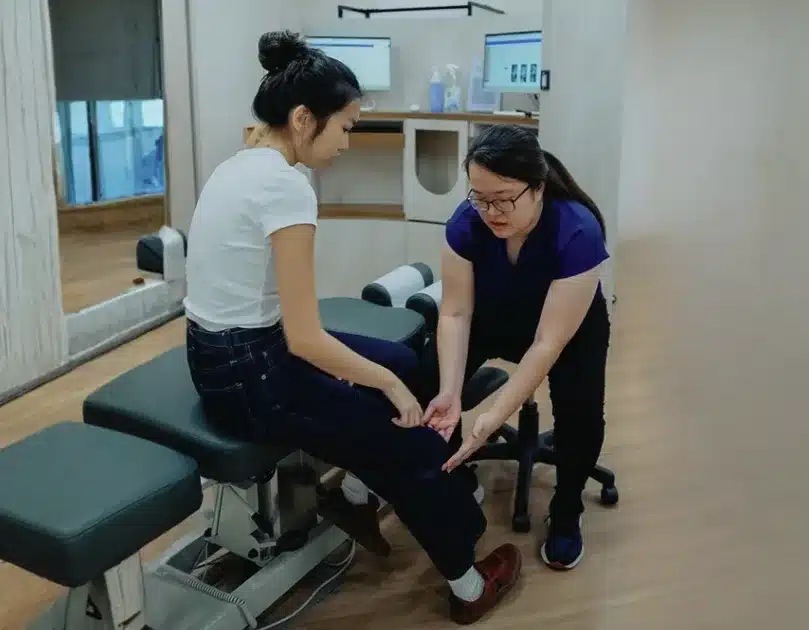
Knee pain is frequently driven by underlying mechanical issues, poor posture, or unequal physical loading across your body. Chiropractic care focuses on gentle, non-invasive joint adjustments, pelvic alignment, and targeted soft-tissue therapies to relieve pressure on the joint, improve lower-limb tracking, and help you avoid surgery.
Rushing up the stairs at Raffles Place MRT or finishing a jog along East Coast Park should not end with a sharp twinge in your joints. Many people live with constant knee stiffness, assuming it only affects serious runners. However, regular structural strain can happen to anyone. Exploring a knee pain treatment without surgery is often a preferred path for those wanting to avoid early medication.
What Causes Knee Pain That Chiropractors Address?
Understanding the structural roots of lower-limb discomfort is essential for finding long-term relief. This breakdown looks at the underlying mechanical imbalances, sports strains, and wear that chiropractors routinely evaluate.
Mechanical Faults and Structural Compensation
Because the body moves as a connected chain, an misaligned pelvis or pronated ankle forces the knee to absorb uneven impact. Over time, this poor tracking strains the cartilage, illustrating how local joint pain often stems from systemic chiropractic conditions & symptoms.
Overuse and Minor Sports Injuries (Cluster C10 Integration)
Repetitive loading during sports activities can irritate local tissues. Minor ligament strains or early-stage patellar tendonitis often stem from poor movement mechanics during running or jumping. Correcting how the joint moves helps unload these stressed tendons.
Age-Related Wear and Joint Degeneration
Early-stage knee osteoarthritis involves gradual changes to the joint surfaces. While chiropractic care cannot reverse structural wear, it appears to help by improving overall lower-limb alignment. Distributing your body weight more evenly can reduce localised pressure on tender areas.
The Clinical Pathway: What to Expect During an Assessment
A professional chiropractic evaluation follows a specific clinical process to identify structural issues. Learn how practitioners analyse your movement patterns and determine if imaging is required.
Comprehensive Biomechanical Evaluation
Your assessment begins well away from the treatment table. A practitioner will typically watch you walk, check your posture, and test the mobility of your hips, ankles, and spine. This full-body look helps pinpoint why a specific joint is working too hard.
When Diagnostic Imaging is Utilised
A chiropractor for knee Singapore visits might involve looking at existing diagnostic films. If a severe structural issue like a high-grade meniscal tear or a fracture is suspected, the practitioner will refer you out for X-rays or an MRI. This step ensures that conservative care is entirely safe for your specific condition.
What Chiropractic Techniques Help with Knee Pain?
Practitioners use specific manual methods to restore mobility and balance to the lower body. Here is an overview of the primary techniques utilised during an appointment.
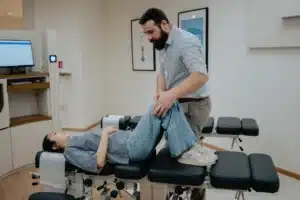
Targeted Knee Pain Chiropractic Adjustment and Mobilisation
When a joint feels stiff or tracks poorly, gentle manual mobilisation can help. The practitioner applies a controlled, precise movement to the knee joint or the patella. This action aims to improve range of motion and ease mechanical friction.
Pelvic and Spinal Alignment for Balanced Weight Distribution
Looking at the lower back and hips is a standard part of addressing lower-limb issues. If your pelvis is uneven, one leg effectively becomes the primary shock absorber. Realigning these structural areas helps ensure that both knees share your daily physical load evenly.
Soft Tissue Modalities for Muscular Balance
Tight muscles can pull the kneecap out of its natural groove. Techniques like myofascial release target tightness in the quadriceps, hamstrings, and the iliotibial band. Relaxing these structures can reduce the constant tension on the joint.
Active Recovery and Lifestyle Management in Singapore
Long-term joint health requires a mix of clinical care and daily habit adjustments. Discover how managing clicking sounds, building targeted strength, and altering your work environment supports recovery.
Addressing Knee Clicking Pain Singapore
Many people notice a clicking or popping sound when bending down. If there is no sharp pain, this knee clicking pain Singapore locals notice is often just soft tissue shifting over a joint or minor tracking errors. Corrective exercises can help smooth out these movements.
Targeted Strengthening for Long-Term Joint Stability
Passive care is only one part of the equation. Standard protocols focus on activating muscles like the vastus medialis obliquus, the inner quad muscle, alongside the gluteal muscles. Stronger supporting muscles keep the joint stable during daily activities.
Practical Ergonomic Advice for Urban Professionals
Sitting at a desk in the CBD for hours with your knees bent tightly can aggravate joint issues. Simple changes like using a standing desk, wearing supportive footwear on Singapore’s concrete pathways, and uncrossing your legs can make a noticeable difference.
Evaluating Options: Conservative Management vs. Surgical Interventions
Choosing the right approach for joint care depends heavily on the root cause of your discomfort. This comparative summary highlights the structural differences between conservative management and surgical options.
| Approach | Focus | Invasiveness | Ideal For |
|---|---|---|---|
| Chiropractic Care | Biomechanical correction, joint alignment, muscle balance | Non-invasive, drug-free | Mechanical aches, overuse, alignment issues, clicking |
| Surgical Options | Structural repair, joint replacement | Invasive medical procedure | Severe trauma, complete ligament tears, advanced degradation |
Take Control of Your Joint Health and Mobility
Managing physical discomfort effectively involves addressing the underlying structural framework of your body. Book a consultation to see how a tailored care plan can support your daily movement.
Chronic joint issues can make simple movements feel like a chore. Focusing on the root mechanics of your lower limbs can help restore comfort and keep you moving freely. If you want to learn more about how chiropractors treat knee pain before considering invasive options, scheduling an appointment is a practical step forward. Visit our booking page to speak with a practitioner.

 Simple, no-pressure, and already trusted by Singaporeans.