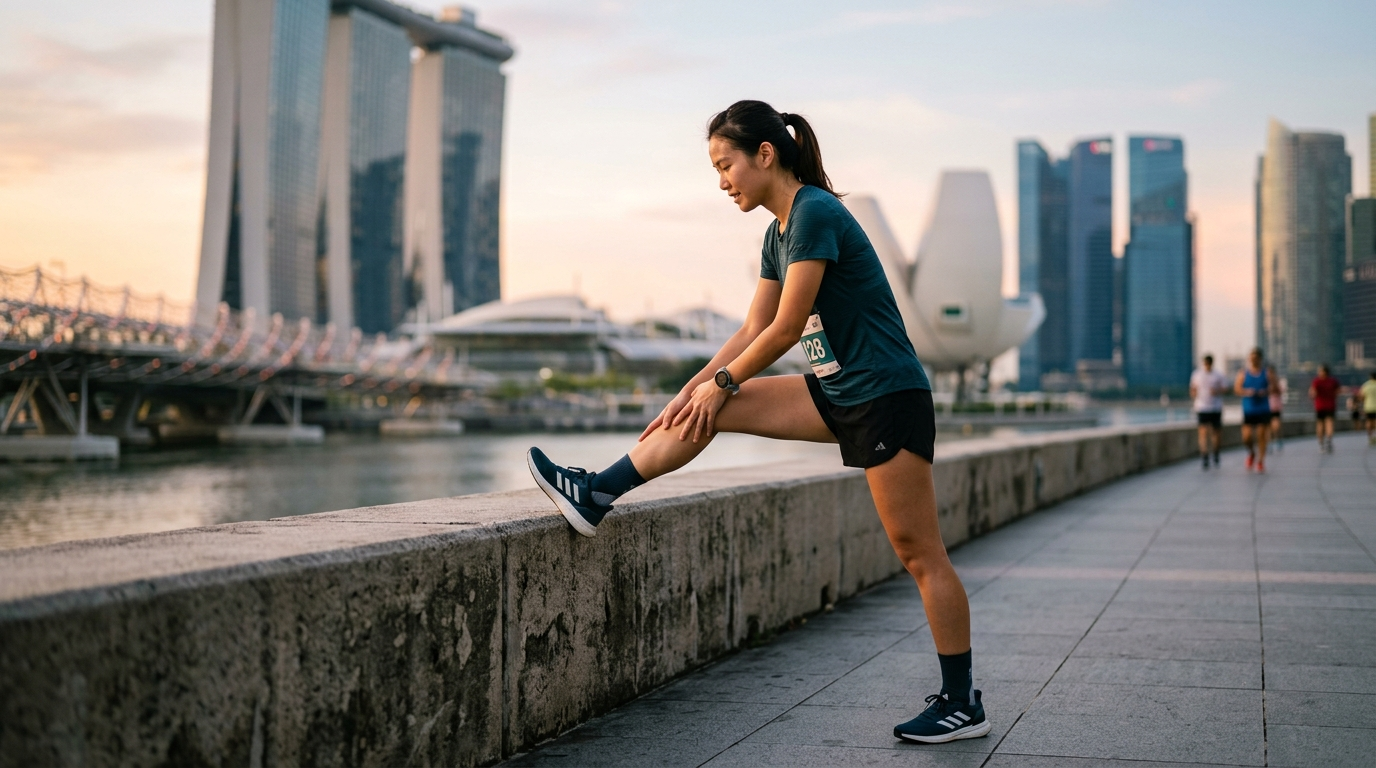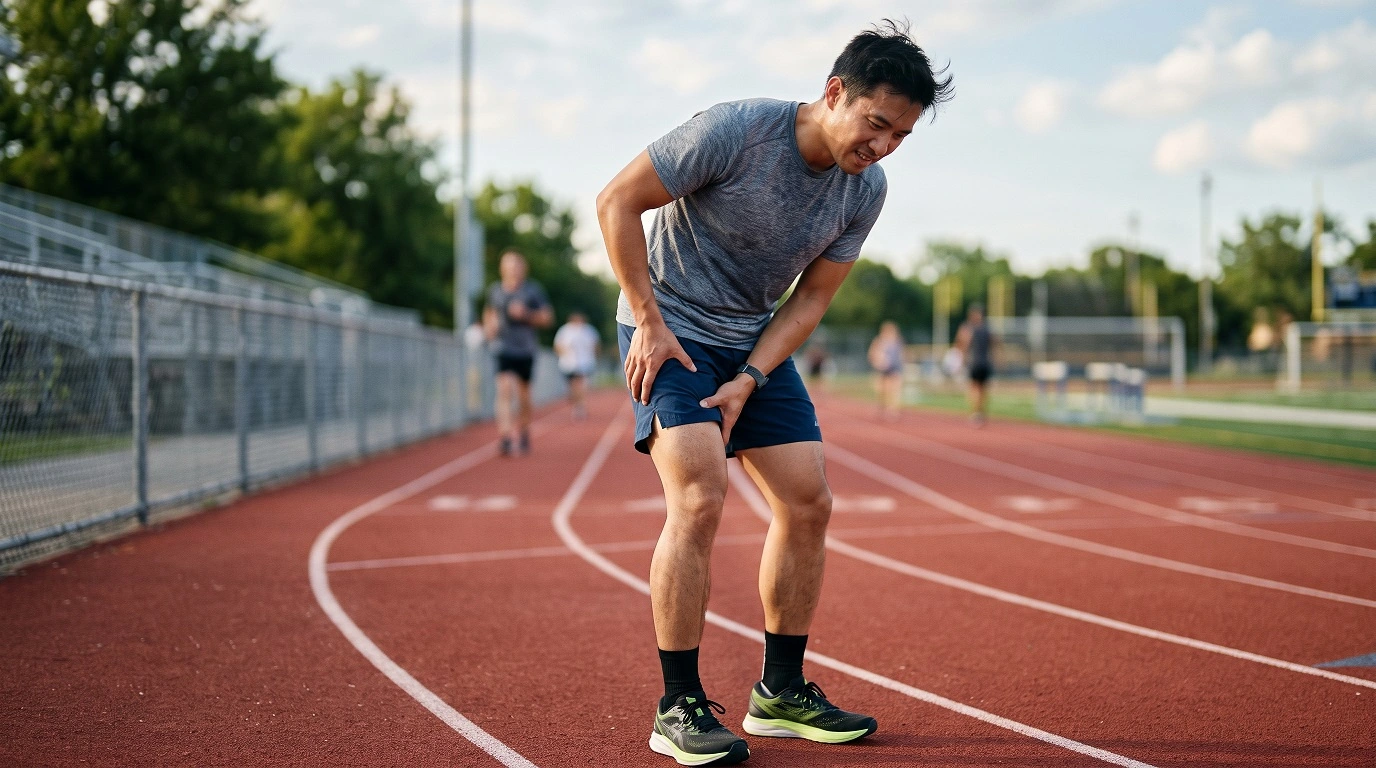
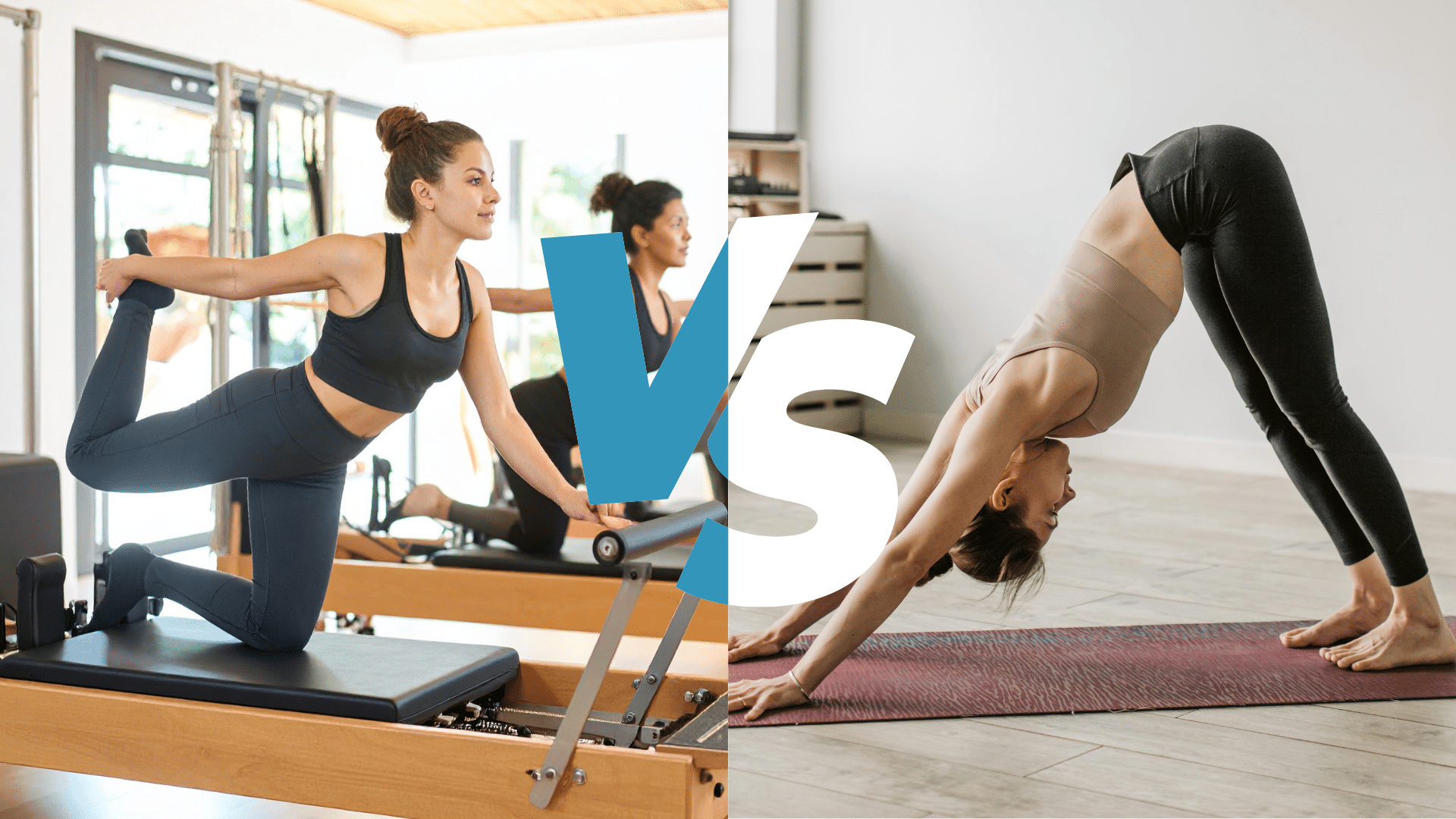
Modern lifestyles often leave our bodies stiff and strained, especially with long hours spent sitting in front of computers or mobile devices. Over time, this lack of movement contributes to poor posture, spinal discomfort, tight muscles, and reduced overall mobility. It’s no surprise that many people look toward movement-based routines, particularly pilates and yoga, to counter these effects, improve flexibility, build strength, and support long-term wellbeing.
But with both practices offering unique benefits, the question naturally comes up: Which one is right for you?
What is the difference between yoga and pilates?
Although yoga and pilates are often mentioned in the same breath, they actually come from very different foundations and offer unique benefits. Yoga focuses on mind and body connection, breathwork, and flexibility, while pilates emphasises core strength, controlled movement, and spinal stability. Understanding these distinctions can help you choose the practice that best supports your body, goals, and overall wellbeing.
Yoga: The Timeless Practice That Transforms Mind and Body
Yoga is an ancient mind and body practice that originated in India, built on the principles of harmony, balance, and inner awareness. Through a combination of physical postures, intentional breathwork, and meditative focus, yoga helps calm the mind while gently strengthening and stretching the body.
Unlike more structured exercise routines, yoga encourages mindful movement, making it effective for improving flexibility, reducing tension, and enhancing mental clarity. Many people turn to yoga not only for physical benefits, but also for its ability to promote relaxation, emotional balance, and a deeper connection with the body.
Pilates: Strengthen Your Core, Support Your Spine
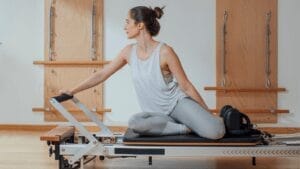
Pilates is a movement method centred on core strength, controlled motions, and postural alignment. It focuses on improving how your body stabilises and moves, helping you build deep core strength and better awareness of your spinal mechanics.
While both practices improve strength and flexibility, pilates places a stronger emphasis on stabilising the spine and strengthening the muscles that support proper posture and efficient movement.
Key Differences Between Yoga and Pilates
Knowing the key differences between yoga and pilates helps you choose the practice that best supports your body, posture, and wellbeing.
| Aspect | Yoga | Pilates |
|---|---|---|
| Mind–body connection | Integrates meditation, mindfulness, and breath control to enhance mental clarity and emotional balance. | Uses breath to support movement, stability, and precise muscle activation rather than meditation. |
| Core focus | Strengthens and stretches the entire body, engaging multiple muscle groups; core involvement is indirect. | Targets deep core and spinal stabilisers, focusing on posture, spinal support, and controlled muscle engagement. |
| Movement style | Flowing sequences, static holds, and transitions guided by breath; style varies by type (Hatha, Vinyasa, Yin, etc.). | Structured, repeatable, and technique-driven movements; may use equipment like reformers to adjust resistance. |
| Breathing approach | Breath techniques promote relaxation, focus, and energy flow. | Breath supports core engagement, spinal control, and efficient movement. |
| Purpose & intention | Harmonises mind and body, reduces stress, improves flexibility, and promotes overall wellbeing. | Builds functional strength, enhances posture, improves movement efficiency, and is often used in rehabilitation or fitness training. |
By comparing these key aspects, you can better decide which practice aligns with your goals—whether that’s improving flexibility, building strength, relieving tension, or supporting spinal health.
What are the types of pilates and yoga and how do they work?
Both pilates and yoga come in several forms, each designed for different fitness levels, goals, and postural needs. Understanding the types can help you choose the most suitable practice for your body and spinal health.
Discover the best pilates styles for your body
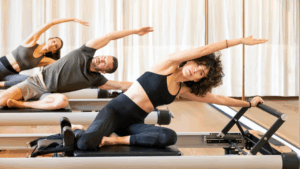
Pilates offers different styles to suit various fitness levels, goals, and spinal health needs:
Mat pilates:
Practised on a mat with minimal equipment, this style focuses on core stability, posture, and controlled movements, making it ideal for beginners.
Reformer pilates:
Utilises the pilates reformer machine with adjustable springs and a sliding carriage. This low-impact, full-body workout strengthens muscles, improves alignment, and supports spinal health.
Clinical or therapeutic pilates:
Designed for rehabilitation, injury prevention, or postural correction. Often guided by physiotherapists or trained instructors, this style safely restores mobility, strengthens stabilising muscles, and enhances posture.
Explore the Key Yoga Styles and Their Benefits

Yoga offers different styles to suit varying fitness levels, goals, and spinal health needs:
Hatha yoga
Gentle and slow-paced, focusing on basic postures and breath control. Ideal for beginners, it improves posture and reduces spinal tension.
Vinyasa yoga
A flowing, dynamic practice linking breath with movement. Builds strength, flexibility, and engages stabilising muscles to support spinal alignment.
Ashtanga yoga
Vigorous and structured, challenging strength, endurance, and core engagement. Supports postural muscles and protects the spine.
Yin yoga
Slow, deep stretches targeting connective tissues. Improves joint mobility, spinal decompression, and flexibility, especially in the lower back and hips.
Restorative yoga
Uses props for full support, promoting relaxation, gentle stretching, and spinal relief. Perfect for recovery and stress reduction.
Common pilates exercises and yoga positions
Many pilates exercises and yoga positions share the goal of improving core strength, balance, flexibility, and posture, while also supporting spinal health and overall body alignment. Understanding some of the most common movements can help you choose the right practice for your needs.
Pilates exercises
Pilates exercises focus on controlled movements that strengthen the core, improve posture, and enhance spinal stability.

Yoga positions
Yoga positions focus on stretching, strengthening, and aligning the body while promoting mindful breathing and relaxation. They improve flexibility, balance, and posture, supporting both physical and mental wellbeing.

By integrating these exercises and positions into your routine, you can **improve spinal stability, enhance posture, and develop balanced muscle strength**. Combining pilates and yoga also creates a holistic practice that supports long-term flexibility, core engagement, and overall wellbeing.
Why choose different types and positions?
Your choice depends on experience, goals, and physical condition. For example:
- Beginners may start with mat pilates or Hatha yoga to learn correct form.
- Intermediate practitioners can progress to reformer pilates or Vinyasa yoga for strength and flexibility.
- Those with spinal or postural concerns may benefit from clinical pilates or restorative/yin yoga, ideally combined with chiropractic support to ensure safe alignment and reduce the risk of injury.
By mixing pilates and yoga types and positions, you can create a balanced routine that supports both physical performance and spinal health.
What equipment do you need for pilates and yoga?
While mat pilates and yoga can be practised with minimal tools, using additional equipment can enhance strength, flexibility, balance, and overall results. Here’s a simple guide showing equipment commonly used for each practice:
| Pilates equipment | Yoga equipment |
|---|---|
| Pilates Mat | Yoga Mat |
| Resistance bands | Yoga strap |
| Pilates ball | Yoga block |
| Pilates reformer | Bolster or cushion |
| Small props (rings, light weights) | Blanket or towel for support |
How pilates and yoga equipment enhances your practice
Using pilates and yoga equipment helps maintain correct posture, engage muscles effectively, and reduce strain on the spine. For example:
- A pilates reformer allows controlled strengthening and stretching while supporting spinal alignment.
- Yoga blocks and straps help achieve correct positioning, improve flexibility safely, and reduce the risk of injury.
- Mats and small props provide cushioning, stability, and balance for both pilates and yoga exercises.
Incorporating the right equipment into your routine improves results and supports spinal health—a key consideration for anyone practising pilates or yoga, especially when complemented with chiropractic care.
How to choose between Pilates and Yoga for your body
Choosing the right practice depends on your fitness goals, physical condition, and what you want to achieve for your body and spine. Both Pilates and Yoga offer unique benefits, but they serve different purposes.
When Pilates is ideal
Pilates is perfect if your focus is on core strength, spinal support, rehabilitation, or improving posture. Its controlled, precise movements target deep stabilising muscles, which:
✅ Strengthen the core and support the spine
✅ Improve balance and posture
✅ Reduce the risk of back pain or injuries
✅ Restore muscle function after injury
Pilates is particularly beneficial for people who spend long hours sitting, have postural imbalances, or are recovering from minor musculoskeletal issues.
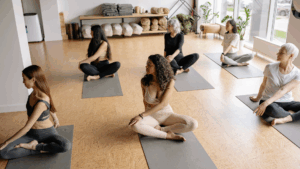
When Yoga is ideal
Yoga is better suited for those seeking flexibility, relaxation, stress relief, and overall body-mind balance. Its poses and breathing techniques:
✅ Stretch and lengthen muscles for better mobility
✅ Improve posture awareness and spinal alignment
✅ Reduce muscular tension and promote relaxation
✅ Enhance mental focus and body awareness
Yoga styles can be adapted to your needs, from gentle Hatha and restorative practices to more vigorous Vinyasa and Ashtanga sequences.
Combining Pilates and Yoga
For many, combining Pilates and Yoga offers the best of both worlds, providing a stronger, more stable core, improved posture and spinal alignment, increased flexibility and mobility, and enhanced body awareness and mindfulness. By integrating both practices into your routine, you can enjoy a well-rounded approach that supports overall physical strength, mental clarity, and long-term spinal health.
How Pilates and Yoga Complement Each Other
Pilates focuses on strengthening the core, stabilising muscles, and improving controlled, precise movement. Yoga, on the other hand, enhances flexibility, mobility, and mindful postural alignment. When practised together, they offer a balanced approach to movement: Pilates provides the strength and stability needed to support the spine, while yoga promotes openness, ease of motion, and better body awareness. The result is a holistic routine that improves balance, posture, mobility, and long-term spinal health.
How Chiropractic Care helps take your yoga & pilates practice to a new level
Chiropractic care can enhance your Pilates or Yoga practice by ensuring your spine and joints are properly aligned, helping you move efficiently, prevent injuries, and get the most out of each session.
Benefits of chiropractic care for your practice
- Enhanced flexibility and strength – Proper alignment allows muscles and joints to work effectively, improving core engagement, balance, and posture.
- Reduced risk of injuries – Correct spinal alignment prevents unnecessary strain on muscles and joints during exercises.
- Improved performance – Supports better movement mechanics, making Pilates exercises and Yoga poses safer and more effective.
- Faster recovery and wellbeing – Helps relieve tension, promotes proper posture, and complements the mind-body benefits of Yoga and the stabilisation focus of Pilates.
Why combining chiropractic care with Pilates or Yoga works
Chiropractic adjustments, Pilates, and Yoga complement each other: Pilates strengthens supporting muscles, Yoga improves flexibility and posture awareness, and chiropractic care ensures correct spinal movement. Together, they promote better posture, reduce injury risk, and support long-term spinal health while enhancing overall performance.
Take control of your spinal health today!
Book a discounted spinal check-up at Chiropractic Singapore and enjoy exercises like pilates and yoga with optimal support.
Frequently Asked Questions about Pilates and Yoga
1. Are there specific Yoga poses that support spinal alignment?
Absolutely. Poses like Cobra, Cat-Cow, Child’s Pose, and Triangle help stretch and strengthen key muscles, improving spinal posture and mobility.
2. Can Pilates help prevent posture-related problems from long sitting hours?
Yes. Pilates strengthens postural muscles, supports spinal alignment, and teaches awareness of body mechanics, which helps counteract prolonged sitting.
3. Is Yoga effective for stress relief alongside physical benefits?
Yes. Yoga integrates breathwork and mindfulness, reducing tension, promoting relaxation, and supporting mental wellbeing in addition to physical improvements.
4. Can both practices be adapted for people with minor injuries?
Yes. Both Pilates and Yoga can be modified to accommodate injury, physical limitations, or postural issues, especially under instructor guidance or combined with chiropractic support.
5. Do I need special clothing or footwear for Pilates or Yoga?
No specialised footwear is needed—barefoot practice is common. Comfortable, flexible clothing that allows free movement is recommended for both Pilates and Yoga.