
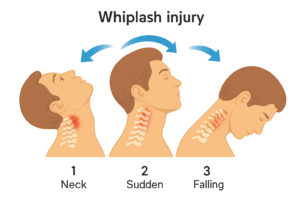
A whiplash injury is one of the most commonly misunderstood neck conditions. It often develops after a sudden back-and-forth movement of the head, most frequently during vehicle collisions, but it can also occur during sports, falls, or any unexpected forceful impact.
Because the symptoms may only appear hours or even days later, many people aren’t aware that they’ve experienced a whiplash injury until discomfort, stiffness or restricted movement begin to set in. Understanding what a whiplash injury is, what whiplash injury symptoms look like, and how to approach care can make a meaningful difference in recovery and daily comfort.
What is whiplash injury and how does it causes neck pain?

A whiplash injury occurs when the soft tissues of the neck—such as muscles, ligaments, and joints supporting the cervical spine are stretched or strained beyond their normal range, typically due to a sudden forward and backward motion of the head.
This rapid movement can cause neck strain or sprain, irritation or overload of surrounding tissues, stiffness in the upper back, and general discomfort that may limit normal movement. Symptoms can vary widely between individuals, which is why an early assessment at a whiplash injury clinic is important to identify the affected areas and determine the most appropriate care plan.
What causes a whiplash injury in everyday life?
A whiplash injury typically occurs when the neck experiences a sudden, forceful movement that stretches or strains the soft tissues faster than they can stabilise. This abrupt motion can overload muscles, ligaments, and joints, leading to pain, stiffness, and limited mobility.

Whiplash Injury common causes include:
- Vehicle accidents: Rear-end collisions are the most frequent cause, as the rapid back-and-forth motion of the head can overstretch neck tissues even at relatively low speeds.
- Sports activities: High-impact or contact sports such as football, rugby, martial arts, or gymnastics can expose the neck to sudden jolts, twists, or falls.
- Falls: Slipping, tripping, or landing awkwardly may force the head forward or backward suddenly, straining the neck.
- Unexpected force: Any sudden impact, such as being hit by an object or experiencing abrupt braking, can trigger whiplash injuries.
Even seemingly minor incidents can sometimes result in whiplash symptoms. Interestingly, the severity of the impact does not always correspond to how severe the neck strain will be. That’s why it’s important to monitor your body’s response after any sudden neck movement and seek professional assessment if discomfort persists.
Whiplash Injury Symptoms — How They May Relate to the Spine
Whiplash occurs when the neck is suddenly forced forward and backward, commonly during car accidents or abrupt impacts. While it’s often described as a soft-tissue injury, the rapid motion places significant stress on the cervical spine, potentially affecting spinal joints, alignment, surrounding muscles, ligaments, and nearby nerves.
When spinal movement or alignment is disrupted after whiplash, the body may compensate in ways that lead to a wide range of symptoms — sometimes immediately, sometimes days later.
Neck stiffness and reduced movement
Following whiplash, the cervical spine may lose its normal range of motion due to joint restriction, muscle guarding, or protective tension. This stiffness is often the body’s response to altered spinal mechanics and local irritation.
Headaches or migraines
Headaches after whiplash can originate from restricted spinal joints, tight neck muscles, or tension around the base of the skull. Changes in cervical alignment may increase strain on surrounding tissues, contributing to persistent or recurring head pain.
Shoulder pain or upper-back soreness
When the neck is not moving efficiently, nearby regions such as the shoulders and upper back often compensate. This added workload can lead to muscle fatigue, soreness, or tightness extending beyond the neck itself.
Pain when turning the head
Difficulty or pain with rotation may indicate limited joint mobility in the cervical spine or surrounding soft-tissue tension. These movement restrictions are common after whiplash and may persist without proper assessment.
Jaw discomfort or tightness
The jaw, neck, and upper spine are closely connected. Changes in neck posture or muscle tension following whiplash can contribute to jaw discomfort, tightness, or difficulty chewing.
While these symptoms are commonly associated with whiplash, they are often linked by one underlying factor: how the spine is moving and aligning after the injury.
Why a Spinal Check-Up Matters After Whiplash
Even when symptoms seem manageable, whiplash can subtly affect spinal movement and alignment in ways that aren’t always obvious at first.

A spinal check-up helps identify:
- Areas of reduced joint mobility
- Spinal misalignments contributing to muscle tension
- Compensation patterns affecting the shoulders, upper back, or jaw
- Early signs of nerve irritation
Because symptoms can evolve over time, a spinal assessment provides clarity on what’s happening beneath the surface, allowing issues to be addressed before they contribute to prolonged discomfort or recurring flare-ups.
Consider a spinal check-up if you notice:
💢 Symptoms lasting more than a few days
💢 Restricted neck or shoulder movement
💢 Pain interfering with work, driving, or sleep
💢 Recurring headaches or upper-body tension
💢 Tingling or numbness in the arms or hands
Early assessment supports safer recovery, better movement patterns, and peace of mind — especially after an injury involving rapid spinal motion.
How Chiropractic Care Supports Whiplash Recovery
Chiropractic care focuses on restoring healthy spinal movement and alignment — two key factors often affected after whiplash.

Rather than masking symptoms, chiropractic care aims to address how the spine is functioning post-injury, helping the body move more efficiently as it heals.
Chiropractic care for whiplash may include:
✅ Spinal assessment to identify restricted or misaligned joints
✅ Gentle chiropractic adjustments to improve mobility and reduce tension
✅ Soft-tissue techniques to ease muscle guarding around affected areas
✅ Movement guidance to restore confidence and range of motion
✅ Postural advice to reduce daily strain on the healing spine
By improving spinal mechanics, chiropractic care can help reduce stress on surrounding muscles and joints — supporting a gradual return to normal daily activities.
Book an appointment at Chiropractic Singapore
Whenever you’re ready, you can book a consultation at Chiropractic Singapore to learn more about what’s happening in your neck and how to support your recovery safely and effectively. Early care can help you move with confidence and reduce the risk of long-term complications
How long does recovery from a whiplash injury usually take?
Recovery from a whiplash injury can vary widely depending on factors such as the severity of the injury, pre-existing neck conditions, age, and how quickly you begin supportive care.
- Mild whiplash: Many people experience noticeable improvement within 1–3 weeks with basic care, gentle movement, and posture adjustments.
- Moderate whiplash: Symptoms may persist for 4–12 weeks, often requiring structured physiotherapy or chiropractic support to restore mobility and reduce discomfort.
- Severe whiplash: In some cases, recovery can take 3–6 months or longer, particularly if multiple tissues are affected or if complications arise.
Early intervention is key. Addressing pain, stiffness, and limited movement promptly can prevent compensatory movement habits, reduce prolonged discomfort, and support a faster return to normal activities. Regular monitoring and following a structured recovery plan tailored to your needs can make a significant difference in outcomes.
Frequently Asked Questions about Whiplash Injury
1. How long should I be off work after a whiplash injury?
Recovery time depends on symptom severity and job type. Many continue with modified duties, while others may need short-term rest, guided by a professional assessment.
2. Is whiplash the same as a neck sprain or strain?
Whiplash usually involves both: a sprain affects ligaments, a strain affects muscles or tendons. The exact tissues affected depend on the injury’s force and direction.
3. Do I need imaging for whiplash?
X-rays, CT, or MRI are typically only needed for severe, persistent symptoms or suspected structural injury. Most mild to moderate cases are managed clinically.
4. What happens during a whiplash injury?
The neck is rapidly forced forward and backward, overstretching muscles, ligaments, and joints. Protective tightening occurs, causing stiffness, soreness, and temporary mobility restriction.
5. Can whiplash cause long-term problems?
Most people recover fully with timely care. Delayed treatment may contribute to ongoing stiffness or recurring discomfort.
6. Can I exercise with a whiplash injury?
Gentle exercises are encouraged to restore mobility and strengthen supporting muscles. High-impact activities should be paused until cleared by a professional.
7. What sleeping position is best for a whiplash injury?
Sleeping on your back or side with a supportive pillow helps maintain neck alignment. Avoid stomach sleeping, which can twist the neck and worsen discomfort.
Rather than masking symptoms, chiropractic care aims to address how the spine is functioning post-injury, helping the body move more efficiently as it heals.
8. What is the best pillow for whiplash recovery?
The best pillow for whiplash supports neutral neck alignment and reduces strain during sleep. Cervical contour, memory foam, and adjustable loft pillows are commonly preferred, as they help minimise morning stiffness and tension.
Learn more in our guide to the best pillow for whiplash and neck pain.