
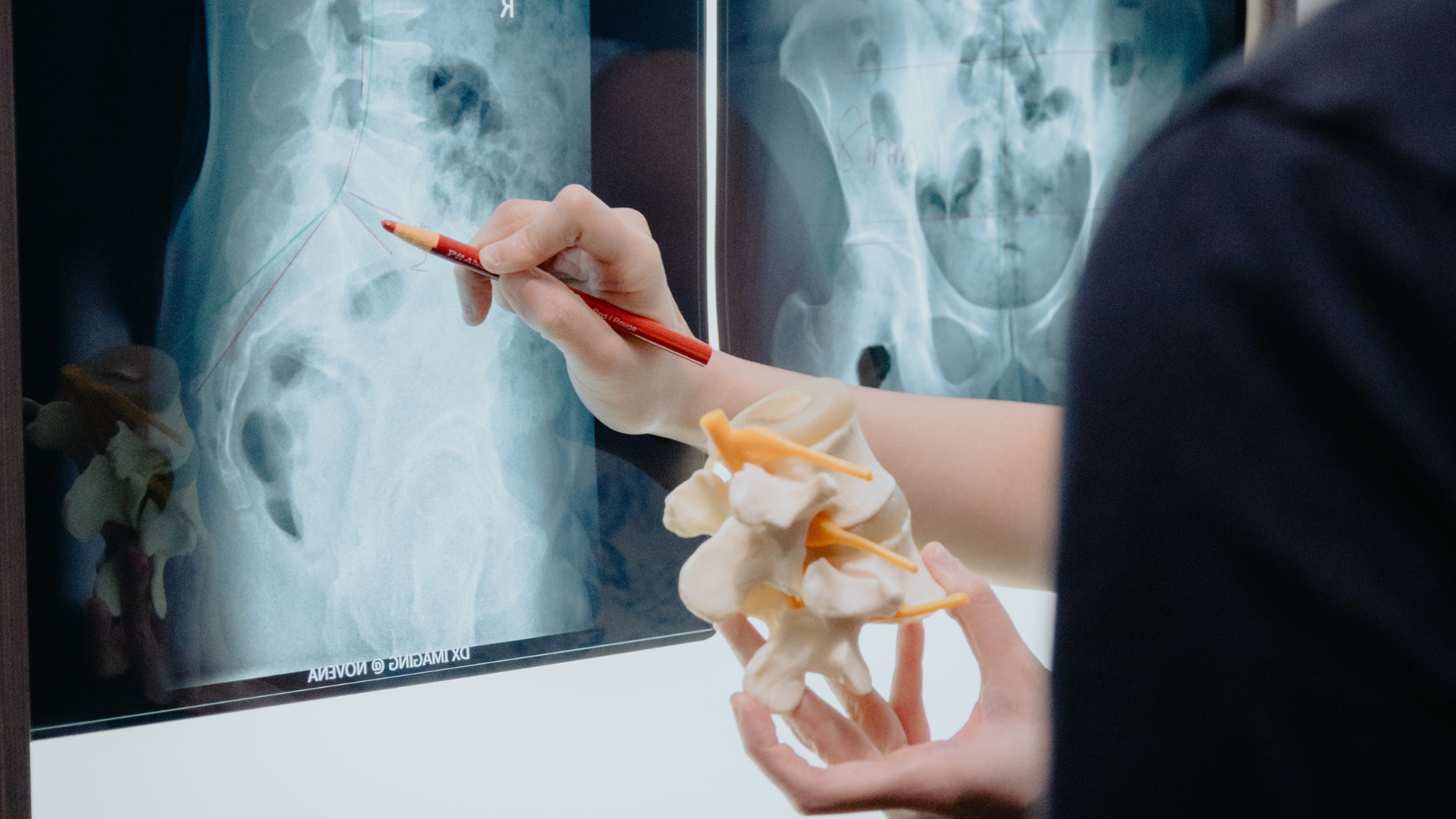
Living with scoliosis can be physically uncomfortable and emotionally challenging, often leaving individuals unsure where to seek appropriate support. While chiropractic care does not claim to cure or reverse scoliosis, a scoliosis chiropractor may play a supportive role in helping individuals manage symptoms, maintain mobility, and support overall spinal function as part of a personalised care plan.
What is scoliosis?
Scoliosis is a spinal condition characterised by an abnormal sideways curvature of the spine. It can affect children, adolescents, and adults, with the degree of curvature varying from mild to more pronounced. Some individuals may experience little to no discomfort, while others may notice symptoms such as muscle tension, postural changes, stiffness, or reduced movement.
Care for scoliosis typically focuses on monitoring the condition and supporting day-to-day spinal health. A scoliosis chiropractor does not claim to straighten the spine or correct the curvature, but instead focuses on improving movement, posture awareness, and overall comfort using safe, evidence-informed techniques.
How Does Scoliosis Affect the Body?
Scoliosis is a three-dimensional spinal condition where the spine curves sideways and may also twist or rotate. This abnormal alignment can influence the body in multiple ways. It often causes visible changes in posture, such as uneven shoulders, hips, or waistline, and can lead to muscle imbalances that result in discomfort or fatigue. Over time, scoliosis may contribute to back pain or neck pain and reduced mobility, limiting flexibility and everyday movement. In more severe cases, the curvature can even affect the function of internal organs, such as the lungs or heart.
While scoliosis is most commonly diagnosed during adolescence, it can also develop or worsen in adulthood, especially if lifestyle, posture, or underlying spinal conditions contribute to its progression.
What are the stages of scoliosis?
Scoliosis is commonly described in stages, based on the degree of spinal curvature and its impact on posture and movement. Understanding these stages helps a scoliosis chiropractor assess progression and provide appropriate supportive care.
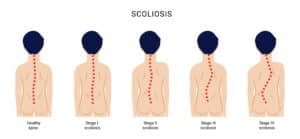
Healthy spine
A healthy spine appears straight when viewed from the back, with level shoulders and hips. Spinal movement is balanced, and scoliosis-related symptoms are typically absent.
Stage I scoliosis (mild)
Stage I scoliosis involves a mild spinal curve that may be difficult to notice. Most individuals experience little to no discomfort, though subtle postural changes or mild muscle tightness may be present.
Stage II scoliosis (moderate)
Stage II scoliosis features a more visible curve. Signs may include uneven shoulders or hips, a protruding shoulder blade, and discomfort after prolonged sitting or standing.
Stage III scoliosis (advanced)
At this stage, the spinal curve is pronounced and may affect posture and mobility. Individuals may experience ongoing muscle tension, reduced spinal movement, and increased physical fatigue.
Stage IV scoliosis (severe)
Stage IV scoliosis involves a severe spinal curve that significantly affects posture and function. Some individuals may already be under orthopaedic care or have had surgery. Chiropractic care at this stage focuses on supporting mobility and comfort where appropriate.
Why is seeing a scoliosis chiropractor important?
The importance of chiropractic care for people with scoliosis lies in functional management, not structural correction promises. Chiropractic care aims to support spinal movement, muscular balance, and posture, which are often affected by scoliosis.
How can chiropractic care support people with scoliosis?
A scoliosis chiropractor focuses on:
- Improving joint mobility around the curved segments
- Reducing muscular tension and asymmetry
- Supporting better posture awareness
- Enhancing overall spinal function
Chiropractic care is often used alongside medical monitoring, physiotherapy, or orthopaedic care, especially in moderate to severe cases.
Importantly, care plans are individualised. No two scoliosis cases are the same, and a responsible scoliosis chiropractor will tailor care based on age, curve type, symptoms, and lifestyle factors.
Can a chiropractor fix scoliosis?
Chiropractic care does not claim to cure or permanently straighten scoliosis. Structural scoliosis, particularly idiopathic scoliosis, is not reversible through manual therapy alone.
Be cautious of any practitioner who claims they can cure, permanently straighten, or fully correct scoliosis through chiropractic care alone. Ethical, evidence-based chiropractic care focuses on supporting spinal function, comfort, and quality of life rather than offering guarantees or permanent structural correction.
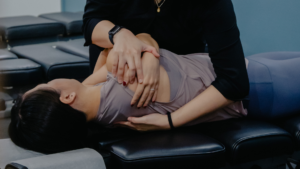
What can a scoliosis chiropractor realistically help with?
While chiropractic care does not “fix” scoliosis, it may help to:
- Improve spinal mobility
- Reduce discomfort related to muscle imbalance
- Support better postural control
- Enhance quality of life
For some patients, consistent care may also help slow functional deterioration and improve daily comfort.
A scoliosis chiropractor will communicate clearly about expected outcomes and work collaboratively with other healthcare providers where appropriate.
What are chiropractic adjustment techniques for people with scoliosis?
A chiropractic adjustment for scoliosis is typically modified and gentle, focusing on mobility rather than forceful correction.
How are chiropractic adjustments adapted for scoliosis?
Chiropractic Techniques may include:
- Low-force or instrument-assisted adjustments
- Targeted mobilisation of restricted joints
- Soft tissue techniques to reduce muscle tension
- Breathing and movement-based spinal exercises
The approach is conservative and responsive to patient comfort, especially for older adults or individuals with complex spinal curves.
A scoliosis chiropractor prioritises safety, comfort, and long-term spinal health over aggressive techniques.
How Often Should Someone with Scoliosis See a Chiropractor?
The frequency of chiropractic care for scoliosis varies based on several key factors:
- Severity of the spinal curve – Larger or more complex curves may require more frequent visits.
- Age of the patient – Growing children and adolescents often need closer monitoring compared to adults.
- Intensity of symptoms – Pain, stiffness, or reduced mobility can influence visit frequency.
- Lifestyle and activity levels – Active individuals or those with physically demanding routines may benefit from more regular care.
A scoliosis chiropractor will tailor a personalised care plan that evolves over time, incorporating regular reassessments to ensure each adjustment and session remains effective, safe, and aligned with the patient’s progress.
Is it safe to have a chiropractic adjustment after scoliosis surgery?
Many patients wonder whether chiropractic care is appropriate after spinal surgery for scoliosis.
Can chiropractic care be considered post-surgery?
In some cases, yes — with proper assessment and clearance.
A scoliosis chiropractor will:
- Review surgical history and imaging
- Avoid fused spinal segments
- Focus on surrounding joints and soft tissues
- Use gentle, non-rotational techniques
Chiropractic care after surgery is aimed at improving mobility in non-fused areas, managing muscular tension, and supporting posture, not altering surgical outcomes.
Collaboration with the patient’s orthopaedic specialist is often recommended.
Take the Next Step in Your Scoliosis Care
Managing scoliosis often requires a multidisciplinary approach, and chiropractic care can play a valuable supportive role. A qualified scoliosis chiropractor focuses on spinal function, comfort, posture, and long-term quality of life.
If you are experiencing scoliosis symptoms, postural imbalance, or spinal discomfort, a thorough assessment can help determine whether chiropractic care is right for you.
Book an appointment with our team at Chiropractic Singapore today and take the first step towards better spinal health.
FAQs about scoliosis and chiropractic care
1. Can children with scoliosis see a chiropractor?
Yes. Children and adolescents can benefit from scoliosis chiropractic care, provided the approach is gentle, age-appropriate, and coordinated with ongoing medical monitoring. Care focuses on supporting spinal function, posture, and overall comfort.
2. Does chiropractic care replace posture correctors or braces for scoliosis?
No. Chiropractic care does not replace bracing or other medical interventions when these are clinically indicated. Instead, it works alongside such approaches by supporting spinal function, movement, and postural awareness as part of a broader care plan.
3. Can chiropractic care prevent scoliosis from worsening?
Chiropractic care may help support spinal mobility, function, and comfort, but scoliosis progression is influenced by multiple factors, including age, curve type, growth stage, and underlying health conditions.
4. Can adults develop scoliosis later in life?
Yes. Adults can develop degenerative scoliosis, which is commonly associated with age-related spinal changes such as disc degeneration, joint wear, or reduced spinal stability over time.
5. Do posture correctors permanently straighten the spine?
No. Posture correctors can help promote postural awareness and temporary alignment, but they do not permanently or structurally correct scoliosis. Long-term management typically requires professional assessment and guidance.
6. Is chiropractic care suitable for severe scoliosis?
Chiropractic care may offer supportive benefits for some individuals with severe scoliosis; however, management often requires close collaboration with medical specialists to ensure care is appropriate, safe, and aligned with overall treatment goals.
7. Is chiropractic care painful for people with scoliosis?
Chiropractic care for scoliosis is generally gentle and tailored to each individual’s condition and comfort level. Chiropractors adapt their techniques to accommodate spinal curves, often using low-force approaches where appropriate. Some people may experience mild, temporary muscle soreness after a session, which typically resolves on its own. Care focuses on supporting spinal function, mobility, posture, and overall comfort rather than forceful correction.
8. Are X-rays necessary before chiropractic care for scoliosis?
X-rays are not always required before chiropractic care for scoliosis, but they may be recommended in certain cases. Imaging can be clinically useful when the severity or pattern of the spinal curve is unclear, there is a history of spinal trauma or surgery, or symptoms are worsening or atypical. Any referral for X-rays should be based on clinical need and follow appropriate radiation safety guidelines.