

Vertigo is a sensation of movement when you are standing still. It often manifests as spinning, tilting, or swaying, which can result in nausea and a loss of balance. For many in Singapore, these episodes disrupt daily life, making simple tasks like driving or walking difficult. While vertigo is frequently associated with the inner ear, the cervical spine and nervous system often play a role.
As a chiropractor for vertigo, we use a clear clinical framework to assess your condition. We help determine if chiropractic care is the right path for your recovery or if a medical referral is the safer next step.
What Is Vertigo?

Vertigo is a particular type of dizziness where you feel as if you or the room is spinning, tilting or moving, even though everything is still. It is different from feeling light‑headed or faint, which is more linked to blood pressure or circulation problems.
Common vertigo symptoms include:
- A spinning or whirling sensation, often triggered by head movement
- Loss of balance or an unsteady gait
- Nausea and, in some cases, vomiting
- Difficulty focusing vision (oscillopsia)
- A sense of fullness or pressure in the ear
Common Causes of Vertigo
Understanding vertigo causes is the first step toward the right treatment. The causes fall into two camps: peripheral (inner ear) and central (brain or nervous system).
Peripheral Causes (Inner Ear Related)
Peripheral vertigo originates in the vestibular system of the inner ear. Common conditions are:
- Benign Paroxysmal Positional Vertigo (BPPV): Triggered by specific head movements, caused by displaced calcium crystals.
- Ménière’s Disease: Involves hearing loss, tinnitus, and ear fullness.
- Vestibular Neuritis: Often follows a viral infection, causing inflammation of the vestibular nerve.
Central Causes (Brain/Nervous System Related)
Central vertigo comes from the brainstem or cerebellum rather than the ear. Important causes include:
- Vestibular migraine: Vertigo episodes with or without headache, often in people with a migraine history.
- Stroke or transient ischaemic attack (TIA): Sudden vertigo with other symptoms such as double vision, slurred speech, weakness, or severe headache can suggest a serious vascular problem.
Other Contributors
Vertigo‑like symptoms can also be linked to:
- Medication side effects (for example some blood pressure or sedative drugs)
- Low blood sugar
- Anxiety or panic
- Neck problems affecting position sense, which may contribute to what is called cervicogenic dizziness
Can a Chiropractor for Vertigo Actually Help?
Chiropractic care does not treat all types of vertigo. What it may help with are cases rooted in the cervical spine or inner ear mechanics.
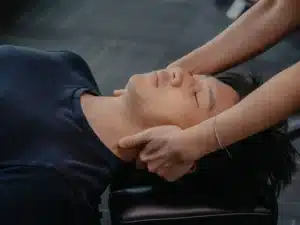
How Chiropractic Addresses Vertigo
Cervicogenic vertigo occurs when dysfunction in the upper neck joints sends faulty proprioceptive signals to the brain. Chiropractic adjustments help restore normal joint movement, potentially reducing these misfiring signals. Gentle spinal adjustments, mobilisation, soft tissue work, and specific exercises may help restore more normal neck movement and improve that sensory input.
For BPPV, chiropractors trained in vestibular rehabilitation may perform a repositioning technique with strong clinical support. Studies suggest success rates of 80–90% for resolving BPPV symptoms in the short term.
Limitations & Honest Assessment
Chiropractic care is unlikely to help vertigo caused by stroke, brain tumours, multiple sclerosis, or acoustic neuroma, and prompt medical attention is essential if such conditions are suspected. For Ménière’s disease or acute vestibular neuritis, chiropractic may play only a supportive role alongside ENT or neurological management, if at all. The safest approach is a collaborative one, where a chiropractor for vertigo in Singapore works alongside medical professionals.
Who May Benefit from Chiropractic for Vertigo
Choosing the right treatment depends on your specific diagnosis. Here is a breakdown of patients into three tiers to ensure you get the most appropriate care:
- High Success Candidates: Those with cervicogenic vertigo (neck stiffness combined with dizziness), BPPV, or symptoms following a whiplash injury.
- Moderate/Co-Managed Candidates: People dealing with Ménière’s Disease or those in the recovery phase of Vestibular Neuritis.
- Referral Required: If there is any suspicion of a stroke, acoustic neuroma, or autoimmune conditions like Multiple Sclerosis, we refer you to a medical specialist immediately.
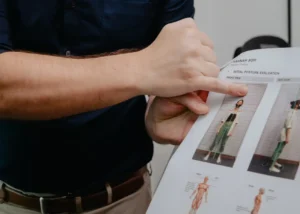
The Chiropractic Assessment for Vertigo
A proper assessment is done before any treatment begins. At Chiropractic Singapore, the process typically involves:
- Detailed consultation: A thorough history of symptom onset, triggers, duration, and any previous diagnoses
- Physical and neurological examination: Cervical range of motion, positional testing, and neurological screen
- Diagnostic imaging if warranted: X-ray or MRI may be recommended to rule out structural issues
- Personalised treatment plan: Based on findings, not assumptions
Chiropractic Treatment Approaches for Vertigo
Chiropractic treatment approach is a combination of spinal adjustments, repositioning maneuvers, and neurological exercises to help retrain your balance system.
- Cervical spine adjustment: Gentle mobilisation or manipulation of the upper neck joints to restore movement and reduce afferent disruption
- Epley Manoeuvre: A series of guided head movements to reposition displaced crystals in the inner ear canal
- Postural correction: Addressing forward head posture and thoracic stiffness, both of which may contribute to ongoing neck-related dizziness
- Lifestyle guidance: Hydration, sleep position modifications, and stress reduction each play a small but measurable role in symptom management
Comparison: Chiropractic vs. Conventional Treatments
| Feature | Chiropractic Care | Medication | Physical Therapy |
|---|---|---|---|
| Primary Focus | Mechanical/Nerve Root | Symptom Management | Exercise/Compensation |
| Non-Invasive | Yes | Yes (Chemical) | Yes |
| Drug-Free | Yes | No | Yes |
| Long-term Outlook | Good for Neck/BPPV | Often Recurrent | Moderate |
Red Flags: When to Seek Urgent Medical Care
Do not visit a chiropractor first if you experience any of the following:
- Sudden, severe headache unlike anything felt before
- Vertigo following a head injury or fall
- Slurred speech, facial drooping, or limb weakness alongside dizziness
- Double vision or sudden hearing loss
- Vertigo at rest that does not resolve or worsens rapidly
Frequently Asked Questions about Chiropractor for Vertigo
Can a chiropractor cure vertigo?
Not in all cases. BPPV and cervicogenic vertigo often respond well; conditions like Ménière’s disease require broader medical management.
How many sessions are typically needed?
This varies. BPPV may resolve within one to three sessions. Cervicogenic cases often require a short course of four to eight visits alongside exercise.
Is chiropractic safe for vertigo?
When carried out by a registered chiropractor following a proper assessment, the evidence suggests it is generally safe for appropriate candidates. Your practitioner should discuss any specific risks with you beforehand.
What should I bring to my first appointment?
Any imaging (X-rays, MRI scans), a list of current medications, and a brief written summary of when symptoms began and what makes them better or worse.
Ready to Find Out If Chiropractic Can Help?
If your vertigo may be related to the neck or inner ear, a professional assessment is the sensible starting point. The team at Chiropractic Singapore offers a comprehensive evaluation to determine whether chiropractic care is appropriate for your specific situation, and if not, to guide you toward the right specialist.
Book a consultation today and take the first step toward steadier ground.