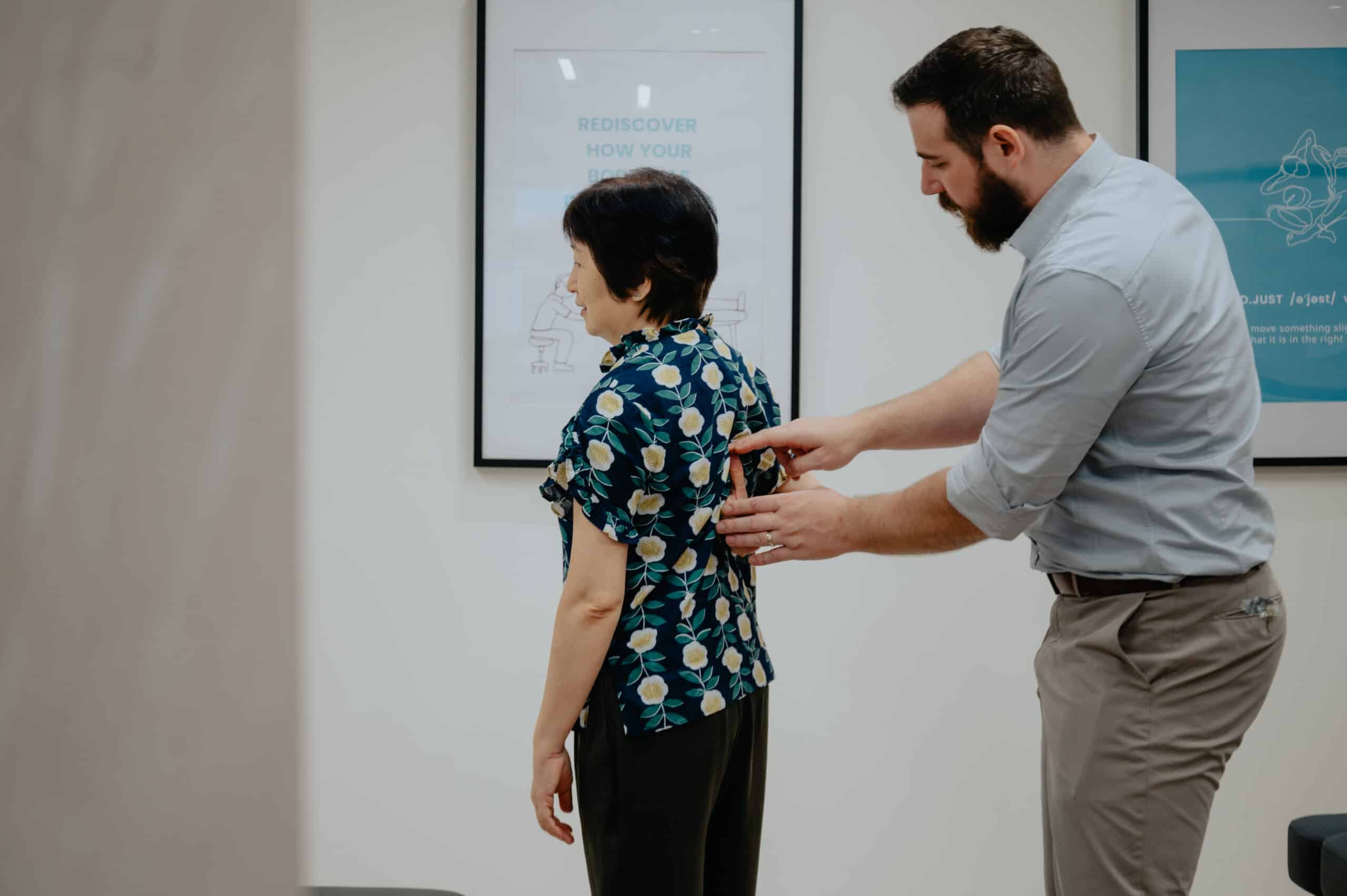

As a parent, it’s natural to worry when your baby seems uncomfortable, cries excessively, or resists certain movements. One area of concern many parents overlook is the neck — a delicate structure that supports your baby’s developing head and spine. Understanding how to tell if baby has neck injury or torticollis can make a big difference in early care and recovery.
This guide provides insights from chiropractors and child health experts in Singapore, covering what to look out for, how to respond, and when to seek professional advice.
Common causes of neck problems and torticollis in babies
Neck issues in infants can result from several factors, and torticollis is often associated with these:
- Birth trauma – Strain during delivery, especially with forceps or vacuum-assisted birth, can contribute to torticollis.
- Prolonged positioning – Consistently lying on one side in cribs, car seats, or carriers can exacerbate torticollis.
- Falls or sudden jerks – Even minor incidents can lead to neck strain or muscular imbalance.
- Delayed neck muscle development – Lack of tummy time or limited movement opportunities may contribute to torticollis or uneven muscle tone.

Understanding these causes helps parents be more mindful when handling, carrying, or positioning their baby.
Signs your baby may have torticollis or a neck injury
Newborns and infants have soft, developing bones and muscles. Any trauma, strain, or awkward positioning can cause discomfort or stiffness. Torticollis is often subtle, but these signs can indicate a problem:
| Torticollis or a neck injury signs | Description |
|---|---|
| Limited head movement | Baby turns the head to one side only, or avoids turning it altogether. |
| Persistent head tilt (torticollis) | Head tilts consistently to one side due to tight muscles. |
| Crying or fussiness when moved | Baby cries when lifted, turned, or placed on the tummy. |
| Uneven shoulders or head position | One shoulder higher or the head leans to one side. |
| Flat spot on the head (plagiocephaly) | May develop from favouring one position because of neck stiffness. |
| Feeding difficulties | Trouble latching or preferring one side during feeds. |
| Sleep discomfort or restlessness | Difficulty finding a comfortable sleeping position or frequent waking. |
If these signs persist, it may indicate muscular imbalance, torticollis, or mild misalignment, which should be assessed by a healthcare professional.
When does a baby’s neck become stable?
If you’re learning how to tell if baby has neck injury, it helps to understand normal neck development first.
- 0–2 months: Neck muscles are still weak; babies can’t hold their head upright yet.
- 3–4 months: Muscles start to strengthen, allowing short head lifts during tummy time.
- 5–6 months: Babies can typically hold their head steady when sitting with support.
- By 6 months: Most have good head control, with stable neck muscles.
If your baby seems behind these milestones, or has difficulty supporting their head beyond six months, consult your paediatrician or chiropractor for an assessment.
Safe ways to support your baby’s neck and prevent torticollis
Knowing how to hold baby neck correctly is essential to prevent strain and support natural development.

Tips for proper neck support
- Always support the head and neck when lifting or carrying your baby.
- Avoid sudden or jerky movements.
- When feeding, keep your baby’s head and body aligned.
- Alternate sides during feeding and sleeping to encourage balanced neck use.
- Offer tummy time daily (while supervised) to help strengthen neck and shoulder muscles.
Proper handling helps promote even muscle development and reduces the risk of baby neck problems.
Are baby neck pillows safe for torticollis?
Many parents search for baby neck pillows that claim to prevent flat head or support the neck. However, according to HealthHub Singapore (KK Women’s and Children’s Hospital guidance) and international pediatric recommendations, pillows are not recommended for infants below 12 months old due to suffocation risks.

Instead, focus on:
- Providing varied sleeping positions: Place your baby on their back for sleep and alternate head positions while awake (HealthHub).
- Ensuring the mattress is flat and firm: Use a firm, well-fitting mattress with a fitted sheet, and keep the sleep area clear of pillows, bumpers, or soft bedding (HealthHub).
- Supervising tummy time: Encourage supervised awake time on the tummy to strengthen neck muscles and support natural head shaping (HealthHub).
Avoid placing any pillows, soft toys, or loose bedding around your baby while sleeping, as these increase the risk of suffocation and SIDS (Columbia Asia).
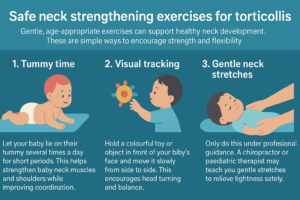
Safe neck strengthening exercises for torticollis
Gentle, age-appropriate exercises can support healthy neck development. These are simple ways to encourage strength and flexibility:
When should you see a chiropractor or doctor?
If you’re unsure how to tell if baby has neck injury, it’s best to seek professional advice rather than self-diagnose. You should consult a chiropractor, paediatrician, or physiotherapist if:
- The baby shows limited movement or consistent head tilt.
- You notice flattening of the head or asymmetrical posture.
- Baby seems in pain or cries when moved.
- There’s no improvement despite tummy time or repositioning.
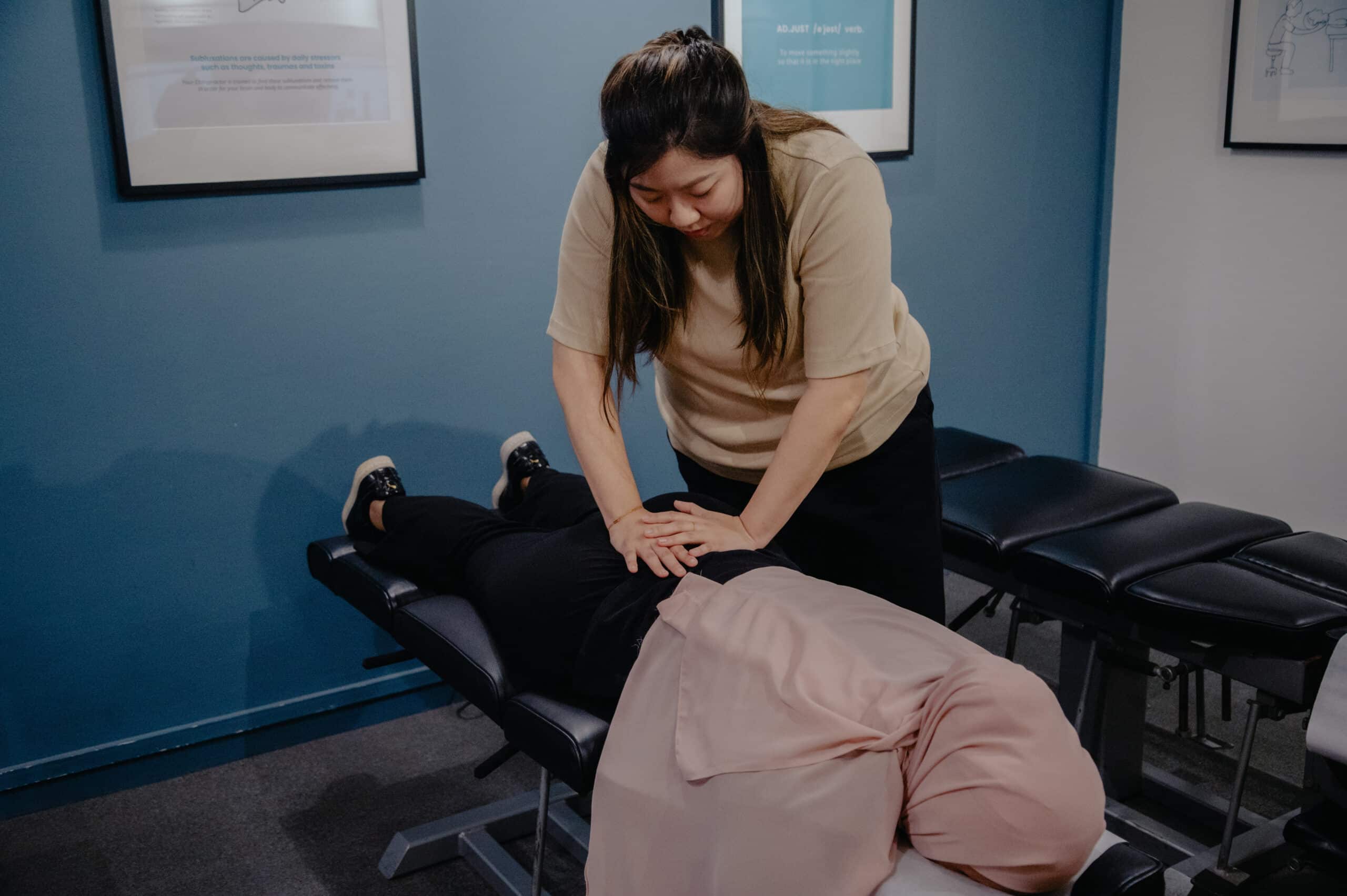
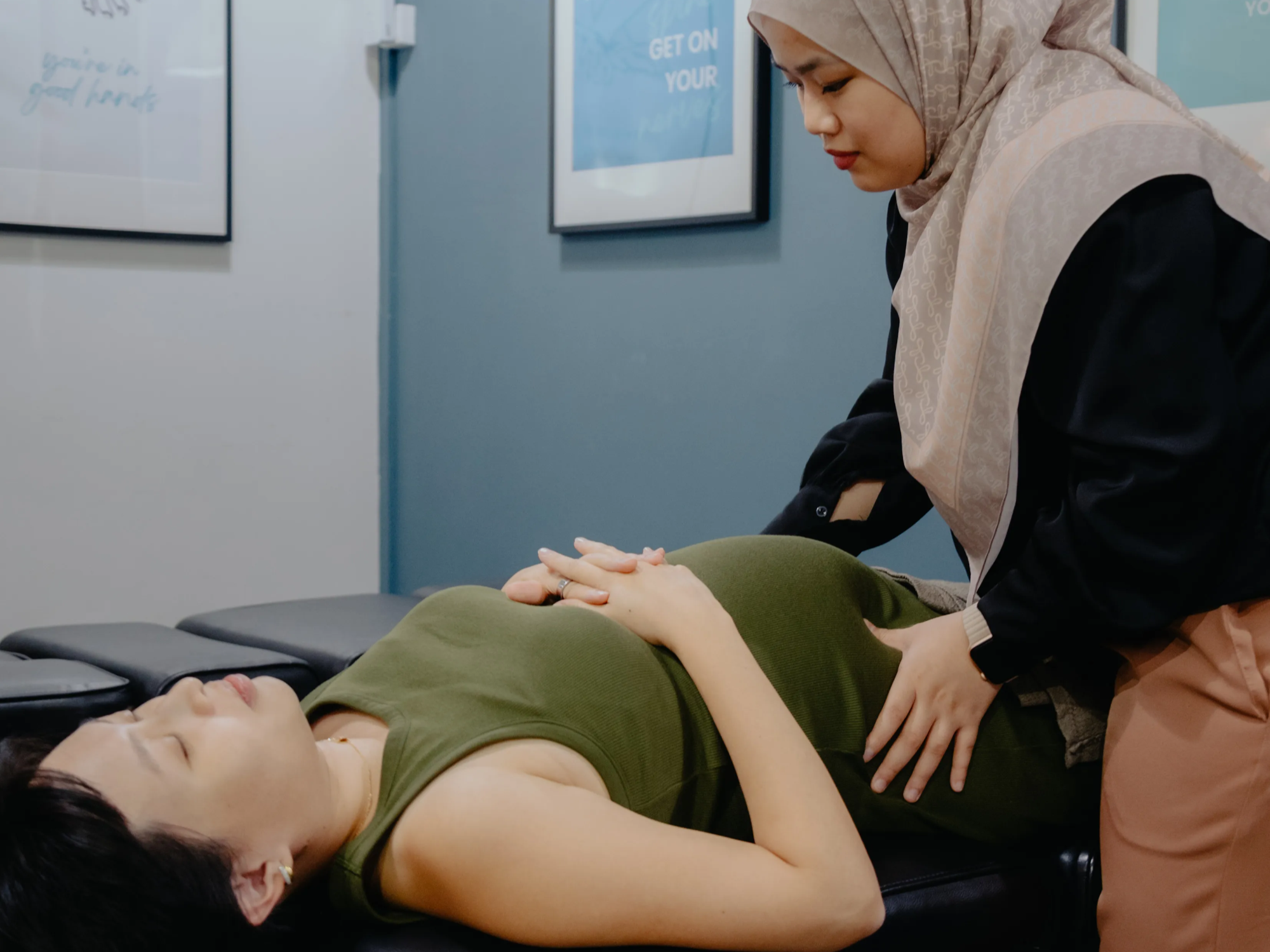
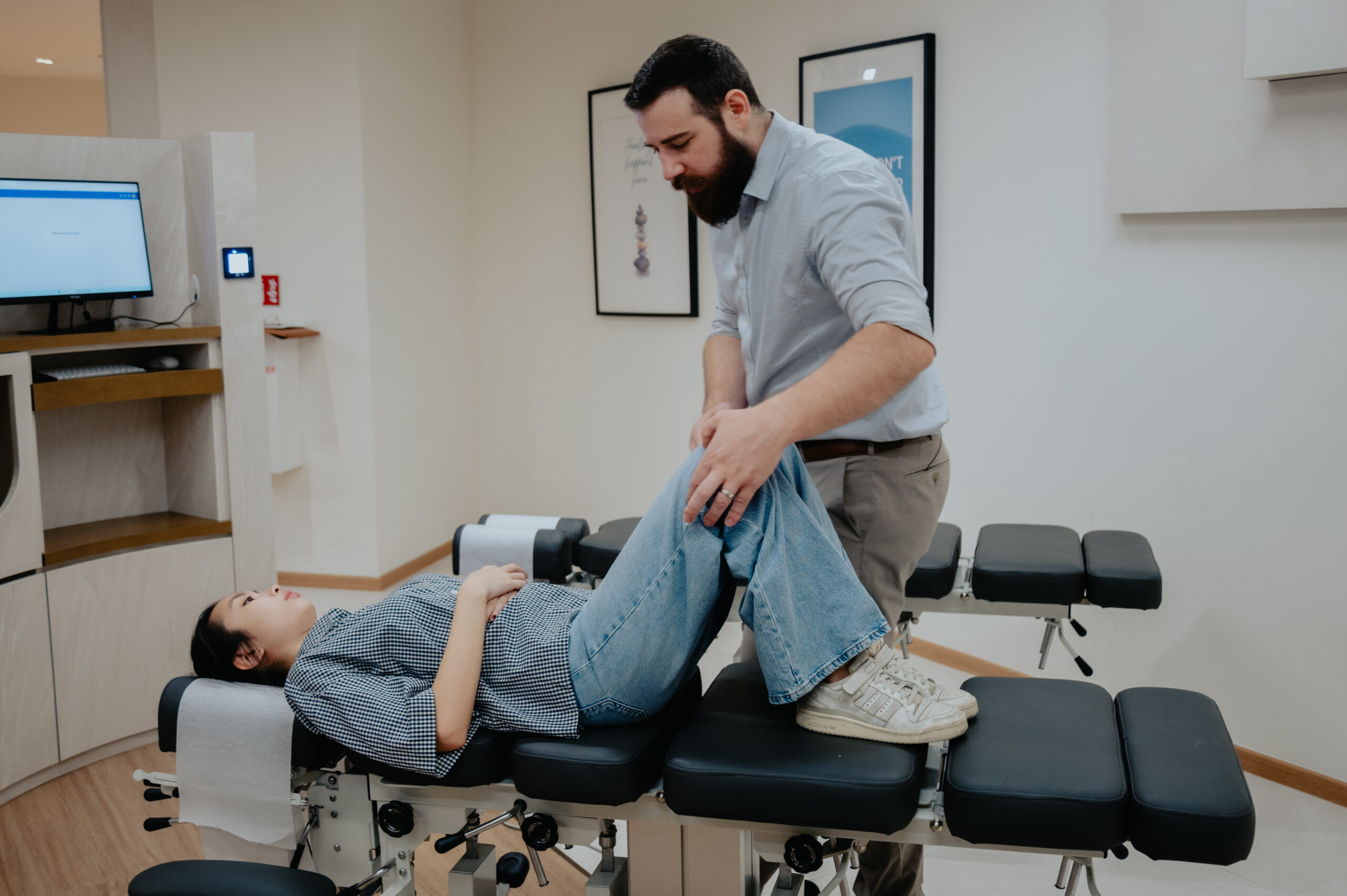
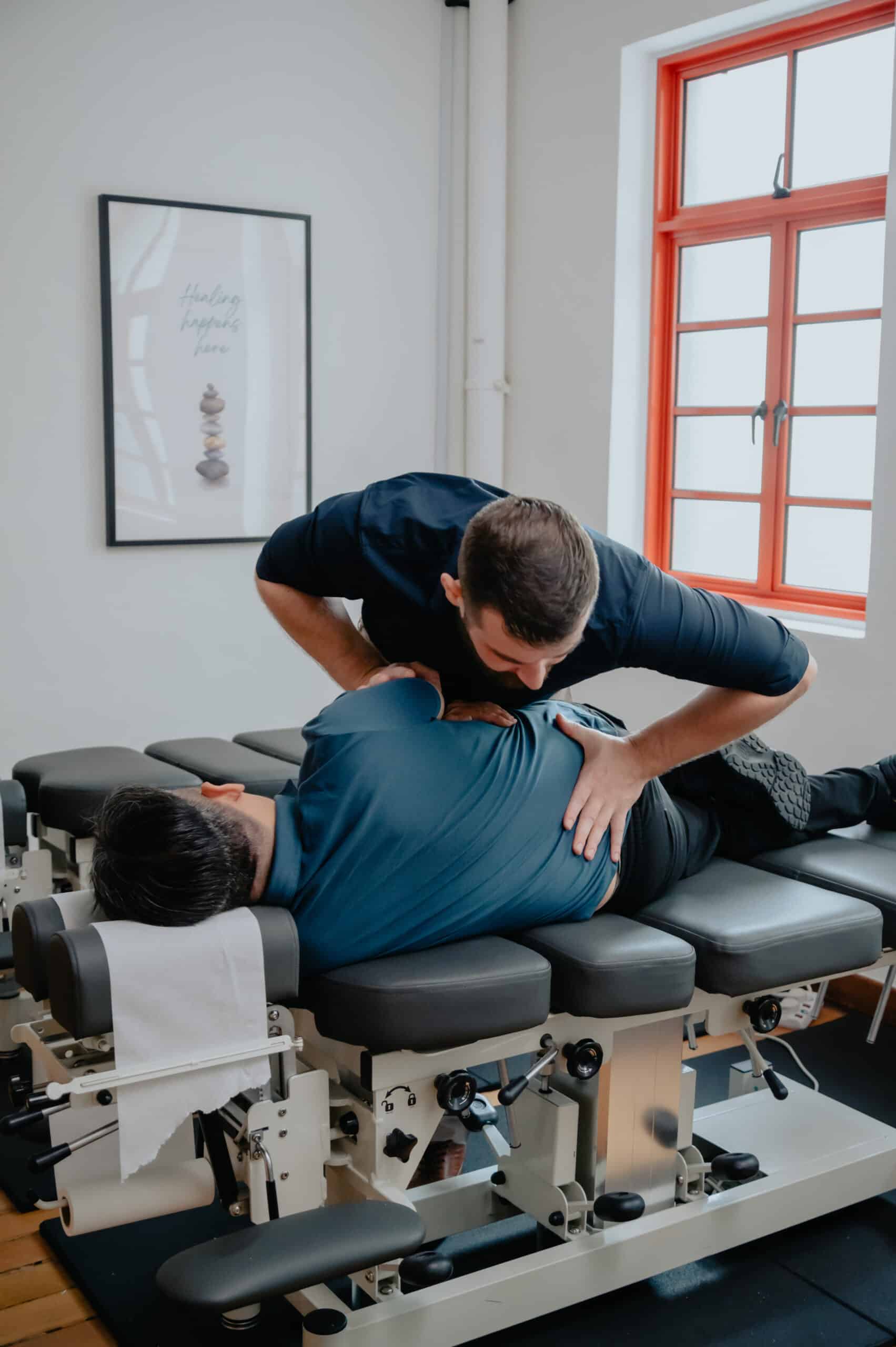
Chiropractors trained in paediatric care use gentle, non-invasive techniques to help improve spinal alignment, reduce tension, and support proper development — always within safe, evidence-based limits.
How do chiropractors assess babies safely?
Paediatric chiropractic care focuses on observation and light-touch techniques. The process is calm, safe, and tailored to your baby’s needs.

A typical assessment may include:
- Postural observation – Checking for tilt, rotation, or imbalances.
- Movement testing – Evaluating flexibility and muscle tone.
- Gentle adjustments or mobilisation – Performed using mild pressure, often no stronger than the force used to test a tomato’s ripeness.
- Parental guidance – On posture, tummy time, and neck support techniques.
At Chiropractic Singapore, we prioritise safe, evidence-based care in line with Singapore’s HSA guidelines. Each session aims to promote natural healing and balanced development — without invasive interventions.
Learning how to tell if baby has neck injury empowers you to respond early and prevent long-term issues. Subtle signs like stiffness or head tilt may seem minor but can affect feeding, posture, and comfort as your baby grows.
If you’re concerned about your baby’s neck movement, posture, or development, schedule a gentle baby posture assessment with Chiropractic Singapore today.
Frequently Asked Questions About Baby Neck Injury or Torticollis
1. How can I help my baby turn their head evenly on both sides?
Encourage balanced neck movement by offering toys or your face on alternating sides, changing the side you hold your baby during feeds, and incorporating short, supervised tummy time sessions. This helps strengthen both sides of the neck equally and promotes healthy posture.
2. Is a slight head tilt in a newborn normal?
A mild head tilt can be common in the first few weeks due to the baby’s position in the womb. However, if the tilt persists beyond the first month or your baby resists turning their head, it may indicate muscle tightness or torticollis and should be assessed by a healthcare professional.
3. Can the way my baby sleeps affect their neck development?
Yes. Babies who consistently lie on one side or remain in the same position for long periods may develop uneven neck muscles or flat spots on the head. Frequent repositioning during supervised awake periods, along with tummy time, encourages balanced neck muscle development.
4. Should I be concerned if my baby seems stiff after vaccinations or minor illnesses?
Mild stiffness or discomfort can occasionally occur after vaccinations or minor illnesses. However, if your baby’s neck stiffness is persistent, severe, or accompanied by other symptoms such as fever, lethargy, or refusal to move the head, seek prompt medical evaluation.
5. Can playtime or interactions with siblings cause neck strain?
Yes. Sudden lifts, rough handling, or awkward positioning during play can strain a newborn’s delicate neck muscles. Always support your baby’s head during lifting or carrying, and supervise interactions with siblings or pets to prevent accidental strain.