Published on: 14 October 2026
Your hip flexor muscles work every time you walk, climb stairs, or stand up, yet most people never think about them until something feels off. Long hours at a desk are a common trigger, and the effects often show up as posture changes or a dull ache you can’t quite place.
These muscles sit at the front of your hip and connect to your lower back and thigh, which is why hip flexor problems rarely stay in one area. Knowing how they work makes it easier to tell what’s actually causing your discomfort and what will fix it.
Key Takeaways
- Sitting for long hours at a desk keeps your hip flexor muscles in a contracted state, physically shortening them over time.
- A tight psoas muscle pulls directly on your lumbar spine, which is exactly why hip stiffness is frequently misdiagnosed as lower back pain.
- While stretching provides relief, correcting functional joint misalignments often requires a comprehensive combination of targeted stretching and active muscle strengthening to fully restore your posture.
- Targeted chiropractic adjustments take the constant strain off your hip flexors by getting your spine and pelvis back into proper alignment.
Identifying and Understanding Your Hip Flexor Muscles
What exactly are these highly important muscles? They are a powerful group of flexible tissues located at the front of your pelvis. They act as the primary engine for your lower body.
Which primary muscles make up your hip flexor group?
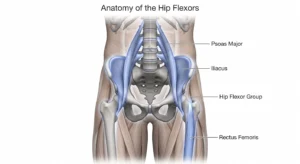
Your hip flexors are not just one single muscle. They are a complex system of interconnected tissues working closely together.
- Iliacus: A flat, triangular muscle that fills the inner side of your pelvic bone.
- Psoas major: A long, thick muscle directly connecting your spine to your legs.
- Psoas minor: A smaller assistant muscle found in the pelvis of some people.
- Rectus femoris: One of the four large quadriceps muscles in your upper thigh.
- Sartorius: The longest continuous muscle in your entire human body.
Where are these core muscles located?
These muscles sit deep inside your lower abdomen and pelvic bowl. They stretch all the way down from your core to the top of your femur.
Because they are buried deep inside your body, they are very hard to massage yourself. You often need professional clinical assistance to properly locate and release them.
Why is the iliopsoas considered the most crucial hip flexor?
The iliacus and psoas major combine to form the iliopsoas. This combined unit is your strongest hip flexor muscle.
It serves as the main muscle group directly fastening your lumbar spine to your thigh bone (femur), acting as the primary muscular bridge between your upper and lower body. You can learn more about its specific structure from the Cleveland Clinic’s anatomy guide.
How Your Hip Flexors Control Daily Movement
Let’s explore how they manage your daily physical activities.
What happens when you lift your leg?
Every time you climb stairs, these muscles quickly contract. They forcefully pull your thigh up toward your stomach to create movement.
These daily actions rely on your flexors working smoothly:
- Stepping up onto a bus or an MRT train.
- Bending forward at the waist to tie your shoes.
- Running, jogging, or cycling along East Coast Park.
- Lifting your knees high during a tough workout.
How do your hip flexors affect core stability?
Core stability relies on a balanced, complex network of opposing muscles. Your hip flexors work closely alongside your glutes, hamstrings, and abdominals to keep your pelvis properly aligned.
When these muscles are perfectly balanced, they help maintain a strong center of gravity. However, if your hip flexors become chronically tight, they aggressively pull your pelvis forward.
This abnormal tightness actually prevents you from comfortably standing up straight. It forces your deep spinal stabilisers and back muscles to overwork and compensate for the structural imbalance.
Why does hip mobility matter for an active lifestyle?
Singaporeans love staying active on the weekends with sports and recreation. However, tight hip muscles will drastically reduce your athletic performance over time.
Reduced mobility creates these frustrating physical limitations:
- Limits your natural running stride length.
- Reduces your overall physical power when lifting weights.
- Increases your risk of sudden sports injuries.
- Makes balancing on one leg incredibly difficult.
Connecting the Anatomical Link Between Hips and the Spine
Your hips and spine share a deeply complex mechanical relationship. If one major joint begins to fail, the other instantly takes on the extra physical pressure.
How does the psoas muscle attach to the lower back?
Because the psoas muscle attaches directly to your lumbar spine, chronic tightness pulls your lower back into a deep, unnatural arch known as hyperlordosis.
According to clinical research published in the National Center for Biotechnology Information (NCBI), this biomechanical shift from prolonged sitting is a frequent contributor to chronic lower back pain for desk-bound professionals.
What conditions can be mistaken for tight hip flexors?
Many patients assume they have an isolated hip problem when the real issue lies elsewhere. It is incredibly easy to confuse structural hip pain with referred lower back issues.
Other conditions that easily mimic tight hips include:
- Sciatica symptoms: Sharp nerve pain radiating rapidly down your leg.
- Pelvic floor dysfunction: Deep, uncomfortable joint instability.
- Herniated discs: Severe spinal injuries causing referred leg pain.
- Bursitis: Painful inflammation in the fluid sacs near the joint.
Reversing Structural Changes When Muscles Shorten
Long hours of sitting cause negative physical changes deep inside your body. Your muscles literally adapt to being stuck in a shortened, resting position.
The mechanics of a shortened hip flexor
When you sit at a desk, your flexors remain permanently contracted. Over time, the muscle fibres actually lose their physical length and elasticity.
This pulls your pelvis forward, creating a condition called anterior pelvic tilt. This forward tilt throws your entire skeleton completely out of proper alignment and is a leading contributor to bad posture.
Why sitting long term impacts your hips

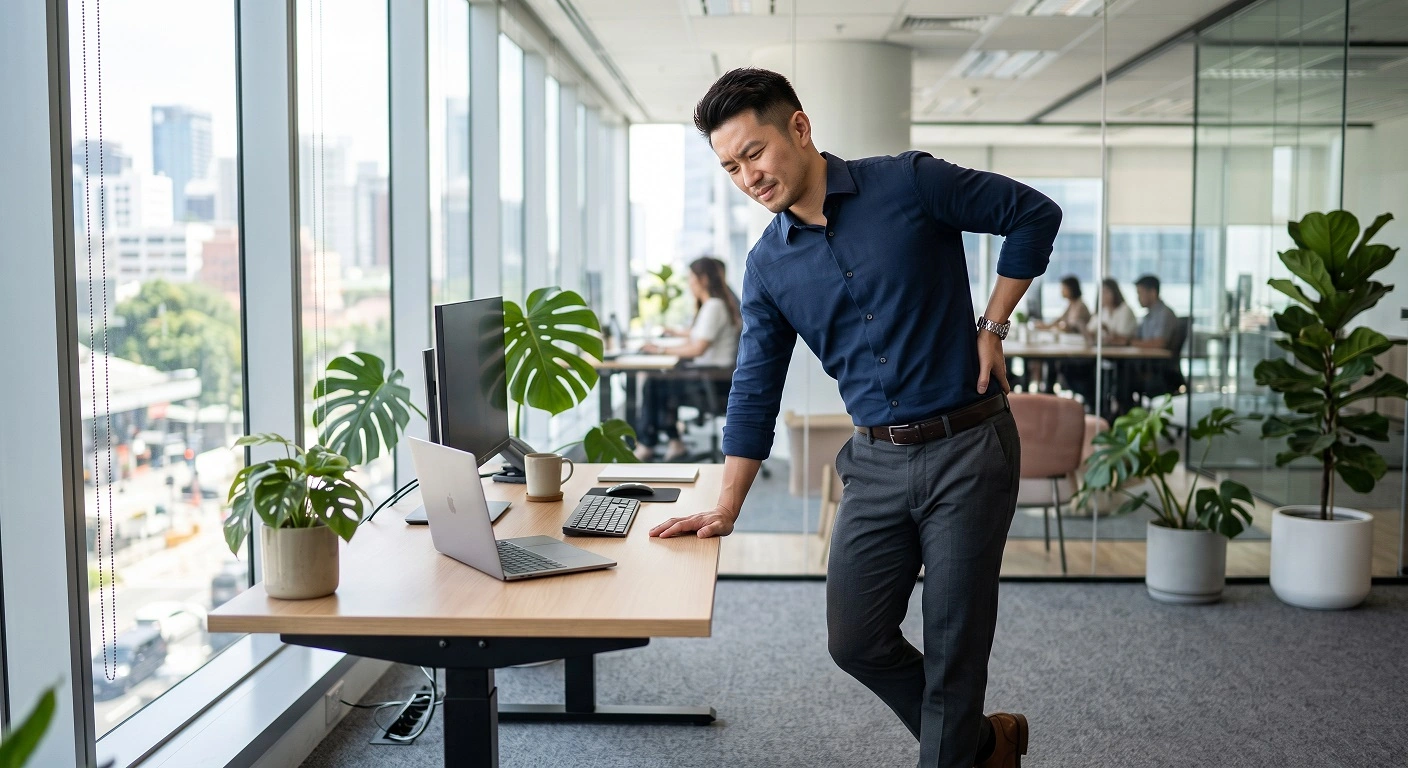
Singapore has a famously fast-paced, desk-bound corporate culture. This extended seated lifestyle is a primary driver of shortened hip flexor muscles, as clinical research published in PubMed notes that prolonged sitting causes an adaptive shortening of the iliopsoas muscle.
Protect your hips at work with these highly effective daily habits:
- Switch to an ergonomic standing desk for part of the day.
- Take a two-minute walking break every single hour.
- Do simple standing stretches during your daily lunch break.
- Sit on a stability ball to keep your core engaged.
The long-term risks of ignoring muscle tightness
Ignoring a tight hip flexor will only make the problem worse over time. Your body will start compensating for the stiffness in very dangerous ways.
You may begin to experience these severe secondary issues:
- Chronic knee pain from poorly altered walking habits.
- Severe muscle spasms located deep in your lower back.
- Painful friction and clicking sounds inside the hip socket.
- Loss of physical independence in your senior years.
How Chiropractic Care Realigns Your Hip Anatomy
You do not have to live with stiff, painful hips forever. Professional chiropractic care can restore your joint mobility safely and effectively.
How do professionals assess your pelvic and spinal structure?
A trained chiropractor will first examine your natural posture and walking gait. They carefully check for hidden misalignments in your spine and pelvic joints.
This detailed physical assessment uncovers the exact root cause of your pain. They do not just guess; they use biomechanical science to thoroughly understand your specific anatomy.
What are the benefits of realigning your physical framework?
Using precise physical adjustments, chiropractors safely correct your underlying joint dysfunctions. This instantly takes the heavy pressure off your overworked and strained muscles.
The amazing physical benefits of structural realignment include:
- Drastically reduced daily muscle tension and stiffness.
- A wider, completely pain-free range of motion.
- Better overall upright posture and daily physical balance.
- Faster physical recovery times after exercise or sports.
When is the right time to seek professional care?
While daily walking breaks and stretching are great for maintenance, they cannot reverse years of deeply rooted structural pelvic misalignment. If your hip tightness continues to affect your daily mobility, it is time to seek professional help.
Chiropractic care offers a safe way to correct these underlying joint dysfunctions without relying on pain medication. By precisely realigning your spine and pelvis, we remove the heavy strain on your overworked muscles.
If you are currently searching for an experienced chiropractor near you, our dedicated team is ready to help. Book your consultation today to reclaim your comfortable, active lifestyle!