

Published on: 14 October 2026
For many patients experiencing radiating wrist discomfort, identifying the exact carpal tunnel syndrome causes is the crucial first step toward comprehensive, non-invasive recovery. When hand numbness and tingling start interrupting your daily life, finding the true source is essential. Many people ignore these early warning signs, hoping the discomfort will simply fade away on its own.
However, masking the symptoms with temporary fixes rarely provides lasting relief. Understanding the physical mechanics behind the nerve pressure can help you make informed decisions about your care. By exploring the physical and lifestyle factors involved, you can take action before the condition limits your mobility.
What is Carpal Tunnel Syndrome?
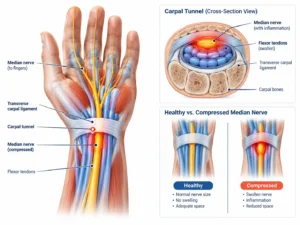
Carpal tunnel syndrome is a condition that develops when the median nerve becomes compressed as it travels through the narrow passageway in your wrist. If you are experiencing tingling or numbness in your hands, you can learn more about general symptom management on our dedicated Chiropractic Wrist Pain page.
Identifying the Primary Carpal Tunnel Syndrome Causes
The primary causes of this wrist condition stem from a combination of structural narrowing, tissue swelling, and repetitive physical stress that pinches the median nerve. Identifying these core triggers helps in building a targeted, effective care plan.
Why did I suddenly get a carpal tunnel?
You may feel like the pain appeared suddenly, but the underlying swelling and spatial narrowing in your wrist usually develop slowly over a long period. Everyday tasks gradually irritate the tendons, causing them to swell and press against the nerve. By the time you notice the sharp aches or numbness, the nerve has already been enduring pressure for quite some time.
Who is most prone to carpal tunnel?
Adult women are more prone to developing this condition due to a combination of a naturally smaller carpal tunnel anatomy and hormonal fluctuations that increase fluid retention. Additional demographic factors, such as age and family health history, also play a significant role in your overall susceptibility. A naturally narrower wrist space means that even a small amount of tissue swelling can lead to noticeable nerve compression.
Assessing Medical Conditions and Health-Related Risk Factors
Various underlying health problems can directly trigger or worsen nerve compression in the wrist by increasing bodily swelling. Certain systemic and biological factors limit the amount of open space your nerve needs to function properly. Clinical literature highlights how systemic inflammation directly reduces the available space within the wrist.
Key health-related risk factors include:
- Inflammatory conditions: Issues like rheumatoid arthritis cause the linings around your tendons to swell, placing severe pressure directly on the median nerve.
- Metabolic conditions: Disorders such as thyroid dysfunction and diabetes can damage nerves over time, making them far more vulnerable to compression.
- Fluid retention: Hormonal shifts during pregnancy or menopause often cause the body to hold onto extra fluids, leading to increased pressure inside the wrist.
Evaluating Occupational Hazards and Repetitive Strain

Repetitive hand motions and demanding occupational hazards create ongoing friction that steadily damages the soft tissues in your wrist. Because radiating nerve pain often travels up the arm, managing repetitive strain and elbow mechanics can be just as important as addressing the wrist directly. Understanding the severity of your daily habits helps determine how much stress your joints are absorbing.
Below is a breakdown of common workplace and lifestyle triggers, categorised by their standard clinical risk and severity classifications:
| Lifestyle / Work Trigger | Motion Trigger | Impact on Wrist | Risk Level & Classification |
|---|---|---|---|
| Office & Desk Work | Continuous typing and heavy mouse usage without ergonomic support. | Creates sustained micro-tension and mild tendon irritation. | Grade 1 (Mild): Occasional numbness, tingling, and slight stiffness. |
| Repetitive Hobbies | Knitting, gardening, or prolonged gaming sessions. | Causes moderate tissue swelling and restricts normal nerve gliding. | Grade 2 (Moderate): Persistent aching, frequent nighttime waking, and grip weakness. |
| Manual & Assembly Labor | Using vibrating hand tools or performing forceful, repetitive lifting. | Triggers severe inflammation, structural damage, and heavy nerve compression. | Grade 3 (Severe): Constant pain, muscle wasting at the base of the thumb, and total loss of sensation. |
Understanding Why Does Carpal Tunnel Get Worse at Night?
Nighttime wrist pain worsens because tissue fluids naturally redistribute when you lie down, and you lose conscious control over your sleeping posture. Without gravity pulling fluids down your arms, swelling easily gathers in the wrists and hands while you rest.
What time of day is carpal tunnel the worst?
The middle of the night and early mornings are often the most painful periods because many people naturally sleep with their wrists bent, which drastically increases pressure inside the carpal tunnel. The lack of movement allows pressure to build up steadily for hours. Many people wake up feeling an intense need to shake out their hands just to restore feeling.
What not to do when you have a carpal tunnel?

It is highly recommended to avoid sleeping in positions that curl your wrists tightly inward. Additionally, do not ignore nighttime numbness, as persistent, untreated compression significantly increases the risk of long-term nerve damage. Keeping the wrist straight with a gentle brace while sleeping can prevent you from accidentally bending it.
Addressing the Underlying Triggers for Effective Long-Term Relief
Addressing mechanical triggers through conservative treatments, such as wrist bracing, ergonomic adjustments, and activity modification, can provide effective relief and may help delay or prevent the need for surgery. Masking the pain with medication ignores the physical pressure currently compressing your nerve. While carpal tunnel syndrome is caused by compression at the wrist, addressing any contributing nerve tension in the neck or shoulder can be a valuable part of a comprehensive care plan. A proper structural assessment helps release tension at the exact point of interference.
Taking the Next Step Towards Natural Recovery
Addressing progressive symptoms like nighttime numbness or daytime weakness early is critical to preventing long-term nerve damage. The longer you wait to correct the mechanical stress on your wrist, the harder it becomes to restore normal feeling and grip strength. A professional structural assessment will pinpoint the exact origin of your nerve compression so you can begin a targeted, non-invasive care plan. If repetitive strain and underlying nerve compression are affecting your daily life, book a comprehensive assessment with Our Chiropractors today to uncover the true cause of your wrist discomfort and begin a personalised recovery plan.