Published on: 14 October 2026
Maintaining strong, healthy bones as you age requires proactive lifestyle choices and an awareness of your body’s changing needs. Many patients seek reliable advice on how to prevent osteoporosis before experiencing a painful fracture or significant mobility loss. This guide provides actionable, long-term strategies tailored for Singaporeans looking to protect their health.
We focus on optimal nutrition, targeted physical activity, and conservative joint care to preserve your overall skeletal integrity. Osteoporosis is a medical condition where bones become weak, brittle, and highly prone to breaking. For a foundational understanding of bone and joint conditions, please visit our page on Orthopaedic Care and Chiropractic Wellness.
Assess Your Individual Risk Factors Early to Protect Skeletal Health
Assessing your individual risk factors early protects your skeletal health by allowing you to make targeted lifestyle changes before bone loss happens. Understanding your genetic background and daily habits is the very first step in forming a strong bone protection plan.
While age and gender play big roles in bone strength, identifying the habits you can control allows for early and helpful action.
- Non-modifiable factors: Risks you cannot change, such as family history, being female, or going through menopause.
- Modifiable factors: Risks you can control, such as a low calcium intake, a lifestyle with little movement, or smoking cigarettes.
Incorporate Essential Nutrients to Support Bone Density

Incorporating essential nutrients into your meals supports bone density by giving your body the exact building blocks it needs to stay strong. A diet rich in specific minerals and vitamins is highly recommended when trying to lower your long-term bone loss risk.
Proper calcium absorption relies heavily on other vitamins, making a balanced approach to your daily diet and supplements very important.
| Nutrient Category | Dietary Examples & Sources |
|---|---|
| Bone-Building Nutrients | Calcium-rich foods (dairy, leafy greens, tofu), Vitamin D sources, and Magnesium. |
| Bone-Depleting Culprits | High-sodium processed foods, excessive refined sugars, and phosphorus-heavy carbonated sodas. |
What is the #1 vitamin to rebuild bone density?
Vitamin D is an essential vitamin for bone density because it significantly enhances your body’s ability to absorb calcium from your meals. Without adequate Vitamin D, calcium absorption is far less efficient, which can contribute to weaker bones over time.
What are the 5 worst foods to eat if you have osteoporosis?
The five worst foods for osteoporosis are salty processed snacks, sugary treats, dark carbonated sodas, excessive alcohol, and processed meats. These items can increase urinary calcium excretion or interfere with your body’s ability to absorb new calcium, which may lead to increased bone resorption.
Does coffee affect bone density?
Drinking more than three cups of coffee a day can lower your bone density by causing your body to lose calcium through your urine. However, enjoying a moderate amount of coffee is generally safe as long as you get enough calcium in your daily diet.
For further reading on supplementation efficacy, explore our detailed guide answering Are Bone and Joint Health Supplements like Collagen and Glucosamine Effective?
Engage in Weight-Bearing and Muscle-Strengthening Exercises
Engaging in weight-bearing and muscle-strengthening exercises prevents osteoporosis by forcing your bones to adapt and grow stronger under mechanical stress. This physical stress applied to your skeletal structure through movement naturally stimulates the bone rebuilding process.
Integrating a mix of resistance training and standing aerobic exercises gives your body a comprehensive stimulus for bone growth.
- High-impact weight-bearing exercises: Activities where your feet hit the ground, like brisk walking, stair climbing, and dancing.
- Low-impact alternatives: Safer choices that protect your joints, such as using an elliptical training machine.
- Resistance and strength training: Building muscle using free weights, weight machines, or elastic resistance bands.
What are 5 exercises that increase bone density?
Five excellent exercises that increase bone density are brisk walking, climbing stairs, lifting free weights, performing squats, and dancing. These specific activities require your body to work directly against gravity, which signals your bones to build more mass.
Is jumping good for osteoporosis?
Jumping is a great way to build bone density in healthy individuals, but it is dangerous if you already have osteoporosis. If your bones are already weak and brittle, high-impact movements like jumping significantly increase your risk of a sudden fracture.
What exercises should not be done if you have osteoporosis?
You should avoid exercises that require deep twisting, sudden jerky movements, or bending forward at the waist, such as traditional sit-ups or swinging a golf club. These specific motions put far too much direct stress on the weakened bones of your spine and can cause them to crack.
For those new to fitness, reference our How to Start Exercising Guide to Body Sculpting Exercises for Beginners to safely build muscle mass.
Maintain Proper Posture and Joint Mechanics to Prevent Falls
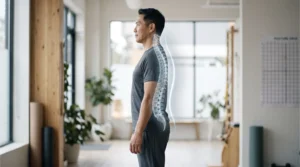
Maintaining proper posture and good joint mechanics helps reduce the risk of falls by keeping your centre of gravity better balanced and more stable. Poor spinal alignment shifts your body weight forward or to the side, which drastically increases the likelihood of tripping.
Because falls are the primary cause of broken bones in patients with osteoporosis, chiropractic care focuses on ensuring your body moves safely and efficiently.
- Techniques for a neutral spine: Keeping your ears, shoulders, and hips in a straight vertical line during daily tasks.
- Ergonomic home adjustments: Removing common tripping hazards like loose rugs to create a safer walking space.
- Proprioception training: Simple exercises that improve your body’s natural awareness and physical balance.
Learn more about aligning your body properly in our Spine and Posture Care with Chiropractic Care a Comprehensive Guide to reduce your fall risk.
If you feel unsteady on your feet, read our article Can a Chiropractor Help with Balance Problems for deeper insights into fall prevention.
Adopt Healthy Lifestyle Habits for Comprehensive Bone Health
Adopting healthy lifestyle habits supports comprehensive bone health by eliminating activities that actively break down your skeletal structure. Your daily routines deeply impact the rate at which you lose bone mass as you age.
Minimising bad habits that interfere with the activity of your bone-forming cells is an essential part of a whole-body preventive approach.
- Eliminate tobacco use: Smoking directly impedes the healthy blood supply to your bones and weakens their structure.
- Moderate alcohol consumption: Drinking too much alcohol actively leaches calcium from your bones and prevents proper nutrient absorption.
- Ensure safe sun exposure: Spending 15 to 20 minutes in the sun daily helps your body naturally synthesise Vitamin D in Singapore’s climate.
You can refer to HealthHub Singapore for local dietary guidelines regarding daily recommended calcium intake.
Evaluate Medical Screenings and Severity Levels

Evaluating your medical screenings and severity levels allows doctors to create a customised plan to protect your bones based on your exact condition. Proactive monitoring through bone mineral densitometry (DEXA) scans allows healthcare providers to measure your bone mass accurately.
This accurate measurement helps doctors recommend the correct natural habits or medical steps based on standardised clinical grading.
| Severity Level / Grade | Clinical T-Score Range | Recommended Action Plan |
|---|---|---|
| Grade 1 (Normal) | T-score of -1.0 or higher | Maintain your preventive lifestyle, balanced diet, and steady exercise habits. |
| Grade 2 (Osteopenia) | T-score between -1.0 and -2.5 | Begin aggressive lifestyle modifications, explore supplementation, and use targeted strength routines. |
| Grade 3 (Osteoporosis) | T-score of -2.5 or lower | Seek comprehensive medical co-management, implement strict fall prevention strategies, and heavily modify exercise for safety. |
| Grade 4 (Severe Osteoporosis) | T-score of -2.5 or lower with a history of fragility fracture | Requires advanced medical management, aggressive fall prevention, and pharmaceutical interventions to manage fracture risks. |
How did I reverse my osteoporosis without medication?
You cannot completely reverse or cure osteoporosis, but you can successfully halt its progression and maximise your remaining density through strict Grade 2 lifestyle interventions. By taking proactive action with high-intensity resistance training and optimal nutrition during the osteopenia stage, patients can help manage their condition and maintain remaining bone mass.
How Chiropractic Care Actively Protects Your Bone Health
Chiropractic care can support your physical stability by addressing spinal alignment and joint mobility, which may positively influence balance and help reduce your risk of falls. When your body moves efficiently and without joint pain, you can safely perform the daily weight-bearing exercises required to maintain a strong skeleton.
Do not wait for a painful fracture to start taking your physical balance and mobility seriously. Our experienced team at Chiropractic Singapore is here to help you evaluate your posture, address hidden mechanical issues, and build a strong foundation for healthy aging.
Take control of your long-term health today Book an Appointment at a Chiropractic Clinic Near You.