Published on: 31 October 2026
If you have just had a bone density scan, the T-score on your report is probably the number you are most curious about. Understanding the T score and osteoporosis link helps you make sense of that report before you talk it through with your doctor. This guide explains what the score measures, how it differs from a Z-score and why it is only one part of the picture.
Key Takeaways
- It is a comparison, not a measurement: A T-score shows how your bone density compares with that of a healthy young adult.
- Lower numbers mean less dense bone: Scores further below zero point to lower bone density than the young adult average.
- Your doctor reads the full report: Results from different sites, your age, health history and fracture risk all shape what the score means for you.
- The Z-score answers a different question: It compares you with people of your own age and sex, and is used more often in younger adults.
- This guide is educational only: It cannot diagnose osteoporosis. Always discuss your result with your doctor.
What Is a T-Score?
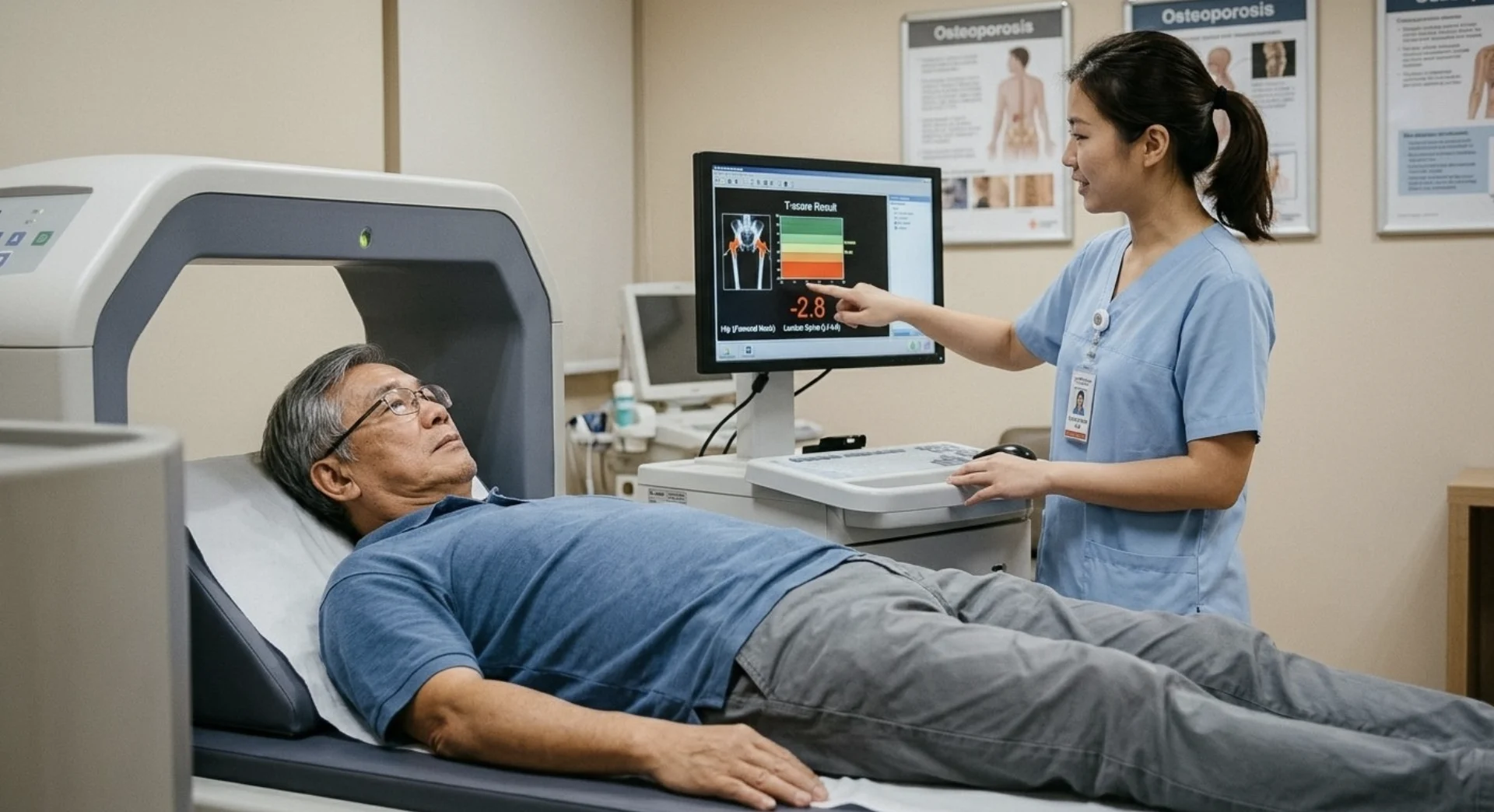
A T-score comes from a DXA scan, a low-dose X-ray test that measures bone mineral density, usually at the hip and lower spine. The machine compares your result with the average bone density of healthy young adults of the same sex, at the age when bones are typically at their strongest. In Singapore, a DXA scan is usually arranged by a GP, polyclinic doctor or specialist, and done at a hospital or imaging centre.
The score is expressed in standard deviations, a statistical unit that shows how far a result sits from the average. A score of 0 means your bone density matches the young adult average. A score of -1.0 means it sits one standard deviation below it, and so on.
How T-Scores Are Grouped
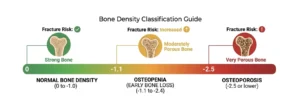
Bone Mineral Density (BMD) is evaluated using set measurement ranges obtained from a Dual-energy X-ray Absorptiometry (DXA) scan, typically focused at the hip and lumbar spine.
In Singapore, the Agency for Care Effectiveness (ACE) Clinical Guideline on Osteoporosis aligns with established criteria to categorise bone health into specific T-score ranges:
| T-Score Range | Clinical Category | Description |
|---|---|---|
| -1.0 and above | Normal | Bone density is within the expected range for a healthy young adult. |
| Between -1.0 and -2.5 | Low bone mass (Osteopenia) | Bone density is lower than normal, indicating an increased risk of bone loss. |
| -2.5 and below | Osteoporosis | Bone density is significantly reduced, indicating a higher susceptibility to fractures. |
A DXA T-score is not the sole criteria used for identification. Under the same ACE guideline, a diagnosis of osteoporosis may also be established following a fragility fracture (a bone break resulting from a minor fall or low-impact incident) regardless of the measured T-score.
Reading Your Bone Density Report
A DXA report can look busy, with several rows of numbers. Knowing what each part shows makes it easier to follow your doctor’s explanation.
Common Items on the Report
- Scan site: Results are usually listed for the lumbar spine and hip, sometimes with separate rows for individual vertebrae or parts of the hip
- BMD: Your actual bone mineral density, shown in grams per square centimetre
- T-score: Your comparison with the healthy young adult average
- Z-score: Your comparison with people of your own age and sex
Why Scores Can Differ Between Sites
It is common for the spine and hip to show different T-scores. Changes such as arthritis or old fractures in the spine can sometimes make a reading look higher than it really is. Your doctor will consider which results are most reliable and usually focuses on the lowest valid score when interpreting your report.
Questions to Bring to Your Doctor
- Which scan site is my result based on, and why?
- How does my result fit with my other risk factors?
- Do I need a repeat scan, and when?
- Are there any changes I should make to stay active safely?
T-Score vs Z-Score
Both scores come from the same scan, but they answer different questions.
- T-score: How does your bone density compare with a healthy young adult? This is generally used for postmenopausal women and men aged 50 and above.
- Z-score: How does your bone density compare with someone of your own age and sex? This is often used for children, premenopausal women and men under 50.
A Z-score of -2.0 or lower is usually described as below the expected range for your age. In that case, doctors may look for other contributing factors, such as certain medications, hormonal conditions or nutritional issues.
Why a T-Score Is Only Part of the Picture
Two people with the same T-score can have very different fracture risk. Age, previous fractures, family history, medications, body weight and fall risk all play a part. This is why your doctor looks at your whole health picture rather than one number.
In Singapore, doctors may use a tool called OSTA, based on age and body weight, to help decide which postmenopausal women need a scan. For people in the low bone mass range, the FRAX calculator estimates the 10-year chance of a major fracture. If treatment is needed, your doctor will discuss options such as medication, calcium and vitamin D, and exercise, so it is best not to draw conclusions from your T-score alone.
If you want to know how to keep your bones strong at any score, our guide to preventing osteoporosis covers nutrition, exercise and daily habits. You can also read what the evidence says about bone and joint supplements.
Non-Invasive Chiropractic Singapore Treatments
Chiropractors do not diagnose osteoporosis or interpret DXA results. Our role is to provide posture and movement care alongside the care you receive from your doctor. High-velocity spinal adjustments are generally avoided in people with low bone density because of the higher risk of fracture, so please bring your bone density report so your chiropractor can plan care safely.

How Care Is Adapted for Lower Bone Density
- A gentle spinal examination and posture analysis
- Low-force techniques instead of forceful adjustments when bone density is reduced
- Posture and movement guidance to reduce strain during daily tasks
- Balance and stability advice, since falls are a common cause of fractures
Our guide to balance problems explains how chiropractic care may support steadier movement. You can also learn more about chiropractic care for older adults.
Frequently Asked Questions
Can a T-Score Improve Over Time?
Bone density can change, and follow-up scans sometimes show small improvements with treatment and lifestyle changes. Your doctor will advise whether and when a repeat scan is useful for you.
Does a Low T-Score Mean I Will Break a Bone?
Not necessarily. A low score suggests a higher risk, but many other factors affect whether a fracture happens. Your doctor weighs these together.
Who Should Have a Bone Density Scan?
Singapore’s clinical guidance prioritises risk assessment for all postmenopausal women and men aged 65 and above, as well as younger men with significant risk factors such as long-term steroid use. Your doctor can tell you whether a scan suits you.
Is a DXA Scan Painful?
No. You lie still on a padded table while the scanner passes over you. The test uses a very low dose of radiation and usually takes only a few minutes.
Taking the Next Step After Your Bone Density Scan
Your T-score is a starting point for a conversation with your doctor, not a verdict on its own. Alongside any medical treatment, staying active, keeping good posture and lowering your risk of falls are all part of looking after your bones.
If you would like posture and movement care that takes your bone density into account, book an assessment with our chiropractors and bring your scan report along.