
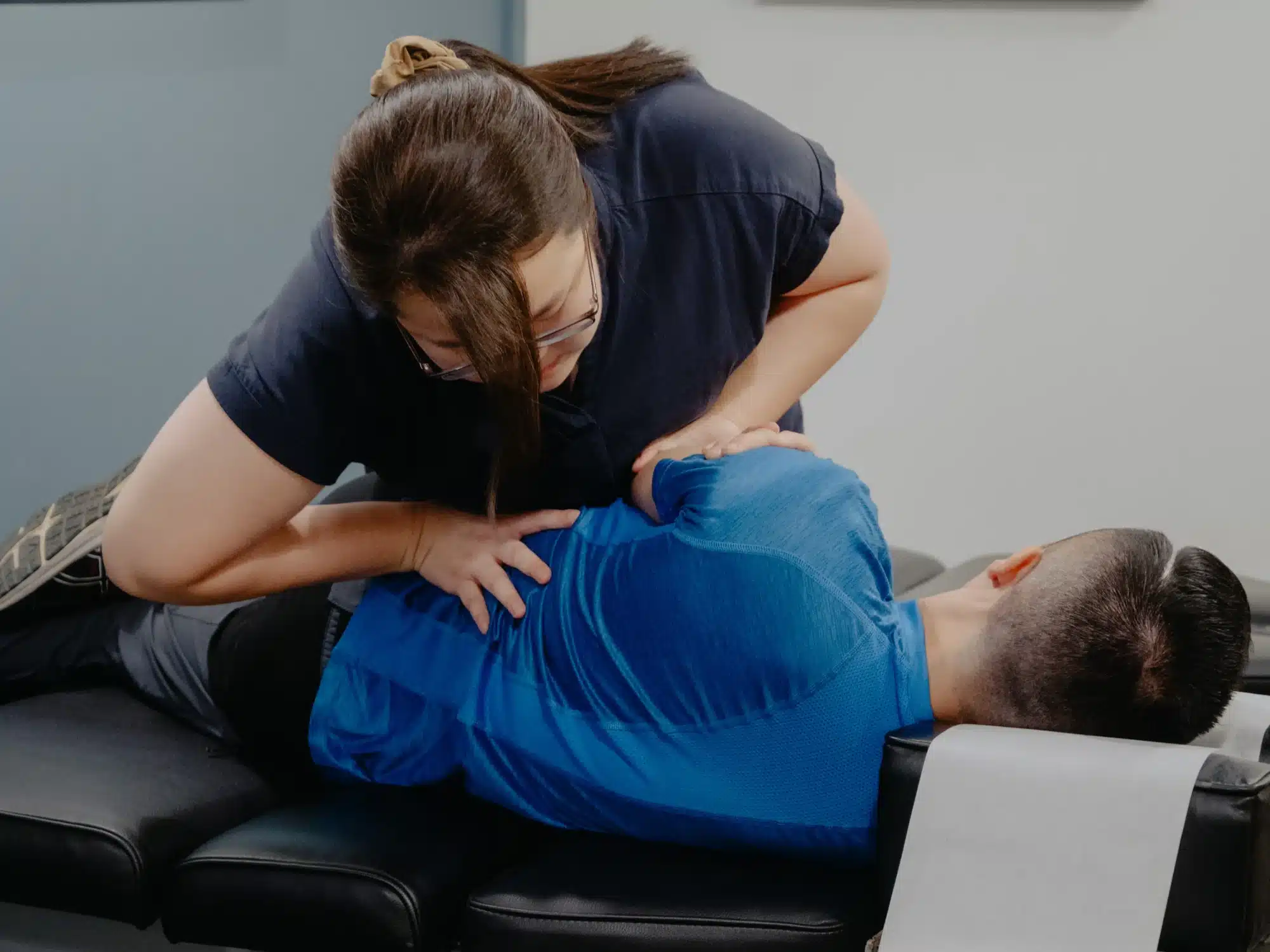
Hearing the diagnosis of a slipped disc can be worrying, and it is common to assume that major spinal surgery is the only option to avoid chronic discomfort. However, clinical evidence shows non-invasive, conservative management, are widely recommended as the first approach to treatment.
What is a Slipped Disc? (Symptoms, Causes & Critical Signs)
A slipped disc is a common term for a herniated disc, where the soft inner centre of a spinal disc pushes through a weakened or torn outer layer. In milder cases, the disc may simply bulge; in more advanced stages, disc material can protrude further or even break off (sequestration), which may irritate or compress nearby nerves.
Common Symptoms
When disc material presses against nearby nerves, it triggers several noticeable symptoms:
- Deep, aching, or localised lower back pain.
- Radiating leg pain, commonly known as sciatica, which travels down the buttocks into the calf or foot.
- Persistent numbness or a pins and needles sensation along the nerve pathway.
- Weakness in specific muscle groups, making tasks like lifting the front of your foot difficult.
Primary Drivers & Causes
Disc problems are usually the result of everyday habits:
- Poor Posture: Slouching puts uneven, constant pressure on your lumbar spine.
- Prolonged Sedentary Sitting: A major issue in Singapore’s office environment, where sitting for hours compresses the lower back.
- Acute Injuries: Sudden strain from lifting heavy objects with incorrect form.
- Age-Related Degeneration: The gradual loss of hydration in the discs over time.
Non-Invasive Treatment Options for Slipped Disc in Singapore
At Chiropractic Singapore, we utilise specific non-surgical protocols to manage disc issues.
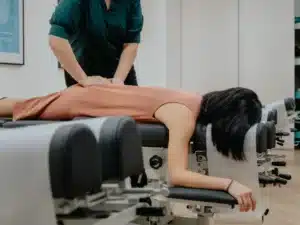
Flexion-Distraction Therapy
Flexion-distraction uses a specially designed table that gently moves in a pumping motion, allowing the chiropractor to flex and decompress specific spinal segments. This rhythmical movement may create a mild negative pressure inside the disc, which appears to help draw bulging material slightly away from irritated nerves and improve joint mobility. Patients often describe it as a gentle “stretch” rather than a strong manipulation.
Spinal Decompression Therapy
Spinal decompression therapy uses manual or mechanical traction to carefully separate the vertebrae and increase space around the disc. Controlled traction cycles can reduce pressure on compressed nerves and may improve local circulation of nutrients and fluids to the disc. In Singapore clinics, this is usually performed with the patient lying comfortably, strapped to a decompression table that applies gentle, intermittent traction. You can read more details on our spinal decompression therapy service page on the site.
Pelvic Blocking & Low-Force Adjustments
For patients who prefer to avoid any twisting or cracking, low-force techniques can be useful. Cushioned wedges are placed under the pelvis (pelvic blocking) to use gravity and positioning to influence disc and joint mechanics without direct force into the painful area. Handheld instruments such as the Activator deliver very controlled, low-amplitude impulses to help guide specific vertebrae back towards more optimal alignment with minimal discomfort. Our chiropractic adjustments page explains these approaches more fully.
Functional Rehabilitation & Lifestyle Management
Manual care is often combined with a realistic plan for movement and daily habits:
- Targeted core and hip stabilisation exercises adjusted to the person’s ability
- Ergonomic tweaks for Singapore office layouts, like monitor height and seat depth
- Sleep strategies such as side sleeping with a pillow between the knees, or on the back with a small support under the knees or lower back
Frequently Asked Questions about Slipped Disc
How long does recovery take with chiropractic treatment?
Many patients notice a difference within 2 to 4 weeks of starting targeted care. However, full structural healing and real stability for the disc generally take between 6 to 12 weeks, depending on your age and daily habits.
Can slipped disc heal on its own?
Yes. Through a natural process called spontaneous resorption, the body breaks down the displaced disc material. Mild cases can settle in a few weeks, while severe ones may take months. Chronic cases lasting over two years usually require structural intervention.
How do I know if my slipped disc needs surgery?
Surgery is usually required if you experience emergency symptoms. These include a sudden loss of bladder control, severe numbness in your pelvic seat area, or rapid muscle weakness in your legs. Without these signs, conservative methods are preferred.
Ready to Take the Next Step?
A slipped disc doesn’t have to mean surgery or chronic discomfort. Conservative management is a highly effective, evidence-based way to manage pain and recover your mobility.