
Published on: 31 October 2026
Carpal tunnel pregnancy symptoms often show up as tingling, numbness or a dull ache in the hands, usually in the later months. Many mums-to-be brush it off as normal swelling, but it is a recognised nerve condition with its own pattern. This guide explains why it happens during pregnancy, what to look out for, the simple measures that help and what to expect after your baby arrives.
Key Takeaways
- It is common in later pregnancy: Most cases appear in the third trimester, when fluid retention is usually greatest.
- Both hands are often affected: Swelling is body-wide, so symptoms frequently appear in both wrists.
- Simple measures come first: Wrist position, night splints and rest breaks are the usual starting point during pregnancy.
- Many cases ease after birth: Symptoms often settle in the weeks after delivery, though some women notice them for longer.
- Warning signs need a check: Constant numbness or a weakening grip should be reviewed by your doctor or obstetrician (often called your gynae in Singapore).
What Is Carpal Tunnel Syndrome in Pregnancy?
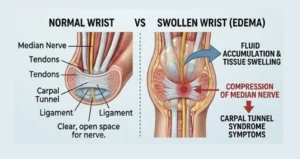
Carpal tunnel syndrome happens when the median nerve is squeezed as it passes through a narrow channel at the base of the palm. During pregnancy, extra fluid and hormonal changes can cause the tissues inside this channel to swell, leaving less room for the nerve. When it starts during pregnancy in someone with no previous history, doctors sometimes call it pregnancy-related or gestational carpal tunnel syndrome.
It is a specific nerve condition rather than general wrist pain. The difference matters, because the pattern of symptoms and the way it is managed are not the same.
Why Pregnancy Raises the Risk
Your body holds more fluid as pregnancy progresses, and some of that collects in the soft tissues around the wrist. Hormones that loosen ligaments in preparation for birth may also play a part. Together, these changes raise pressure inside an already tight space.
Timing plays a significant role in how pregnancy-related carpal tunnel syndrome presents. A narrative review published in the Journal of Personalized Medicine highlights that symptoms are most frequently reported during the third trimester, accounting for approximately 63% of cases, compared with lower rates in the first and second trimesters. Research indicates that fluid retention, hormonal fluctuations, and increased tissue volume during late pregnancy contribute directly to median nerve compression. Additionally, factors such as maternal age and gestational metabolic changes can influence an individual risk profile, making early awareness and conservative ergonomic support key during the final months of pregnancy.
Common Symptoms to Watch For
Pregnancy symptoms tend to build gradually and are often worse in the morning or after a night of sleep. Swollen hands after a long day can make them more noticeable.
Signs You May Notice
- Pins and needles in the thumb, index, middle and part of the ring finger
- Numbness that wakes you at night or is present when you wake up
- Aching that spreads from the wrist into the forearm
- Clumsiness when doing up buttons, holding a phone or gripping a cup
- Symptoms in both hands at the same time
When to Speak to Your Doctor
Most symptoms are mild, but some need prompt attention. See your doctor or obstetrician if numbness becomes constant, if you notice weakness or wasting at the base of the thumb, or if symptoms appear alongside sudden swelling of the face and hands, headaches or vision changes. These last signs can point to pre-eclampsia, a pregnancy condition that needs urgent review.
How Is It Diagnosed During Pregnancy?
Doctors usually diagnose it from your symptoms and simple hand checks, such as tapping over the wrist or holding it bent for a short time. If symptoms are severe or unclear, a nerve conduction study can be done safely during pregnancy. Our guide to the carpal tunnel syndrome test explains these checks in more detail.
Managing Symptoms Safely During Pregnancy
Care during pregnancy focuses on easing pressure on the nerve with simple, low-risk measures. Any decisions about medication or injections should be made with your obstetrician, and some common anti-inflammatory painkillers are not recommended in pregnancy, so check before taking any.
Positioning and Daily Habits
- Keep your wrists straight when typing, scrolling or holding your phone
- Avoid sleeping with your hands curled under your pillow or tucked against your chest
- Raise your hands on a cushion when resting to help fluid drain
- Take short breaks from repetitive gripping and gently shake out your hands
Night Splints
A simple wrist splint worn at night holds the wrist in a neutral position while you sleep. This can ease the night-time tingling that disturbs sleep for some women. A splint should never feel tight, especially when your hands are swollen. Your healthcare provider can advise on the right type and fit.
Will It Go Away After Birth?
For many women, symptoms ease in the weeks after delivery as excess fluid leaves the body. This is one reason why surgery is rarely considered during pregnancy itself.
Recovery is not the same for everyone. The same review notes that symptoms can persist for up to about three years in some women, and they are more likely to linger when they started early in pregnancy. Lifting, feeding and carrying a newborn also put fresh strain on the wrists, so good positioning remains important. If symptoms are still there a few months after birth, see your doctor.
Our guide to comfortable breastfeeding positions has practical tips for this stage.

Non-Invasive Chiropractic Singapore Treatments
Chiropractic care during pregnancy uses gentle, pregnancy-adapted techniques and supportive positioning, so you can stay comfortable throughout your visit. Our chiropractors look at the full nerve pathway from your neck to your fingertips, since posture changes in pregnancy can add tension higher up.
What Your Visit May Include
- A gentle spinal examination and posture analysis adapted for pregnancy
- Checks of the neck, upper back and shoulders, which carry extra load as your body changes
- Wrist and hand assessment to understand your symptom pattern
- Simple home advice on positioning, splint use and rest breaks
Care may include low-force adjustments, soft tissue work for the forearm and upper back, and guidance you can follow between visits. Learn more about our approach to pregnancy chiropractic care. If anything in your assessment suggests you need medical review, we will refer you to your doctor or obstetrician.
Frequently Asked Questions
Is Carpal Tunnel a Sign Something Is Wrong With My Pregnancy?
On its own, it is usually a common side effect of fluid retention rather than a sign of a problem with your baby. Sudden swelling with headaches or vision changes is different and needs urgent medical attention.
Can Carpal Tunnel Start After Giving Birth?
Yes. Some women first notice symptoms in the postpartum period, often linked to repetitive lifting, feeding positions and lingering fluid changes. Pain on the thumb side of the wrist when lifting your baby is more often a different condition called De Quervain’s tenosynovitis, sometimes known as mummy thumb, so it is worth getting checked.
Is Chiropractic Care Safe During Pregnancy?
For most women with an uncomplicated pregnancy, chiropractic care using pregnancy-adapted techniques is generally considered low risk. It is not advised without your obstetrician’s clearance if you have vaginal bleeding, placenta previa, pre-eclampsia or other pregnancy complications. Always tell your chiropractor how far along you are and share any advice from your obstetrician.
Should I Wear a Wrist Brace During the Day?
Night splints are the most common recommendation. Some women also wear a light brace during tasks that bend the wrist, such as typing, but it should not be worn tight or all day. Check the type and fit with your healthcare provider first.
Taking the Next Step During Pregnancy
Tingling hands are common in later pregnancy, but they do not have to go unchecked. Simple changes to wrist position and sleep can make a difference, and a gentle assessment can show whether your neck and upper back are adding to the pressure.
If carpal tunnel symptoms are making pregnancy or early motherhood harder, book an assessment with our chiropractors. We use pregnancy-adapted techniques and will work alongside the advice of your obstetrician.