
Published on: 02 October 2026
Sharp pain at the front of your hip when you sprint, kick, or stand up is a common sign of a hip flexor muscle strain. The injury happens when the muscles connecting your lower back and pelvis to your thigh are stretched beyond their limit or torn.
Runners and desk workers in Singapore are both at risk because a sprint or kick can overload a muscle that has spent hours shortened. How long it takes to heal depends on how badly the fibres are torn and how early you stop aggravating it.
Key Takeaways
- Symptom Recognition: Hip flexor strains present as sharp pain in the front of the hip or groin, frequently accompanied by upper thigh cramping, functional weakness, and stiffness when attempting to stand up straight.
- Primary Causes: Muscle tears typically occur during sudden, explosive actions (like sprinting or changing direction), with individuals who sit for long hours at a higher risk due to chronically shortened, tight muscles.
- Immediate Care Protocol: Treat the injury within the first 48 hours using ice and rest. Strictly avoid aggressive stretching, deep lunges, or pushing through the pain, as these actions widen micro-tears and increase bleeding.
- Recovery Timelines: Healing depends entirely on the severity of the injury, ranging from 1 to 3 weeks for minor micro-tears (Grade 1) to 8 weeks or more for severe, complete ruptures (Grade 3).
- Chiropractic Intervention: Chiropractic care addresses the mechanical root of the injury by realigning the pelvis and lumbar spine. This removes uneven structural stress from the hip flexors, allowing the tissues to heal while restoring safe joint mobility.
Recognising the Signs of a Hip Flexor Injury
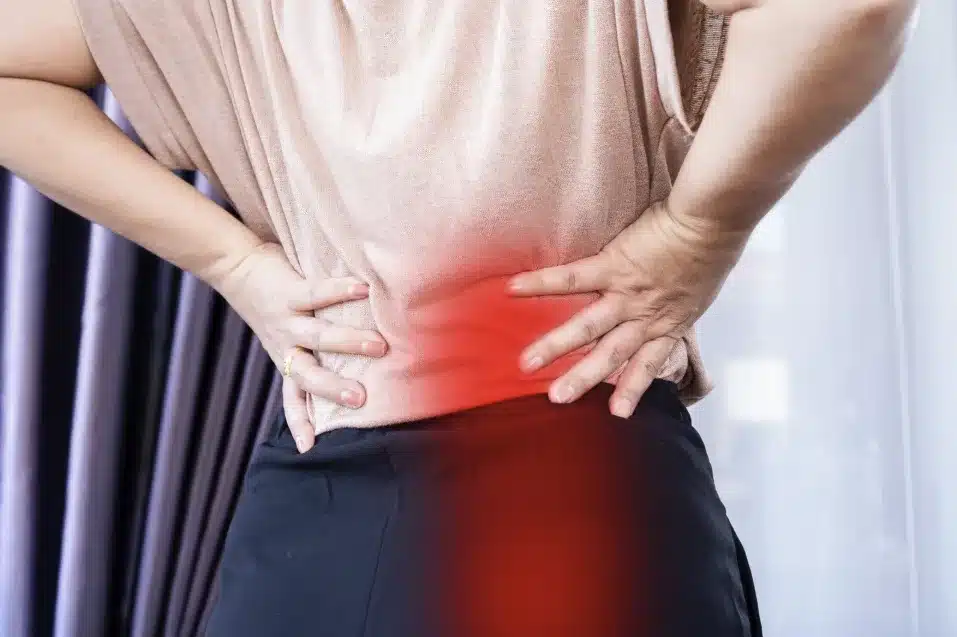
The main sign of a hip flexor strain is sharp pain at the front of your hip or groin. This can range from a mild, nagging ache during daily activities to a sudden, severe pull that stops you mid-workout.
Other common indicators include:
- Pain when lifting your knee: Sharp discomfort when pulling your knee toward your chest, kicking, or climbing stairs.
- Tenderness and swelling: Sensitivity to touch near the hip crease, sometimes accompanied by mild swelling or bruising at the top of the thigh.
- Cramping and spasms: Clenching sensations in the upper thigh, especially when accelerating into a sprint or stretching your leg backward.
- Restricted mobility: Deep stiffness that makes it difficult to stand up completely straight after sitting for long periods.
Front-hip pain has other possible sources, and the wider causes of hip pain, from arthritis to bursitis and labral tears, can feel similar to a strain. Get it checked if the pain came on without a sprint, kick, or sudden movement to explain it.
What Causes a Hip Flexor Strain?
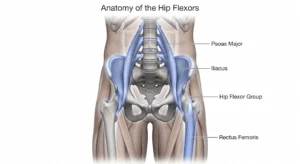
A hip flexor strain happens when the muscle is forced to contract hard or stretch further than it can handle. It usually involves the iliopsoas muscle, which runs from your lower spine and pelvis to the top of your thigh bone, and is the main muscle that lifts the thigh, or the rectus femoris, the thigh muscle that also crosses the hip. There are three common causes:
- A sudden explosive movement: a sprint start, a high kick, a hard knee drive, or a quick change of direction overloads the muscle in a single moment.
- Overuse: repeated sprinting or kicking, or a rapid jump in training, wears the muscle down gradually until it strains.
- Long hours of sitting: sitting keeps the hip flexors shortened, and a muscle that has been short and inactive all day is more likely to tear when it is suddenly asked to sprint or kick.
How Long Does a Hip Flexor Strain Take to Heal?
A mild hip flexor strain usually heals in 1 to 3 weeks, a moderate one in 3 to 6 weeks, and a complete tear in 8 to 12 weeks or longer. The difference comes down to how badly the muscle is torn, which doctors grade from 1 to 3.
| Strain severity | What it means | Typical recovery |
| Grade 1 (mild) | Minor tears in the muscle fibres, with little loss of strength or movement | 1 to 3 weeks |
| Grade 2 (moderate) | A partial tear, with noticeable pain, limping, and weakness | 3 to 6 weeks |
| Grade 3 (severe) | A complete tear of the muscle or tendon, with severe pain, swelling, and loss of function | 8 to 12 weeks or longer, sometimes with surgery |
Going back to sprinting or kicking too early is a common reason a strain returns, and Cleveland Clinic’s guidance on hip flexor strain advises checking with a provider before resuming intense activity.
Managing Pain and Supporting Active Recovery
You can manage a hip flexor strain during the initial 48 hours by applying ice, resting the muscle, and gradually introducing light, pain-free movement. Adhering to clinical recovery protocols ensures you do not inadvertently worsen the muscular tear during the early stages of healing.
Should I stretch a strained hip flexor?
No, you should not aggressively stretch a strained hip flexor during the acute pain phase. Stretching a torn, inflamed muscle fiber pulls the tissues further apart, increases bleeding, and significantly delays the healing process.
Can I still walk with a hip flexor strain?
You can still walk with a mild strain, provided the pain remains highly manageable and your natural gait is not altered. However, if walking causes you to limp, you are placing excess compensatory stress on your lower back and pelvis, and you should rest the leg entirely.
When should you see a doctor?
See a doctor rather than managing it at home if:
- You felt or heard a pop, followed by sudden severe pain
- You can’t walk or put weight on the leg
- Heavy bruising or swelling appears at the front of the hip or thigh
- The pain hasn’t started to ease after 2 weeks of rest
How Chiropractic Care Supports Hip Flexor Strain Recovery
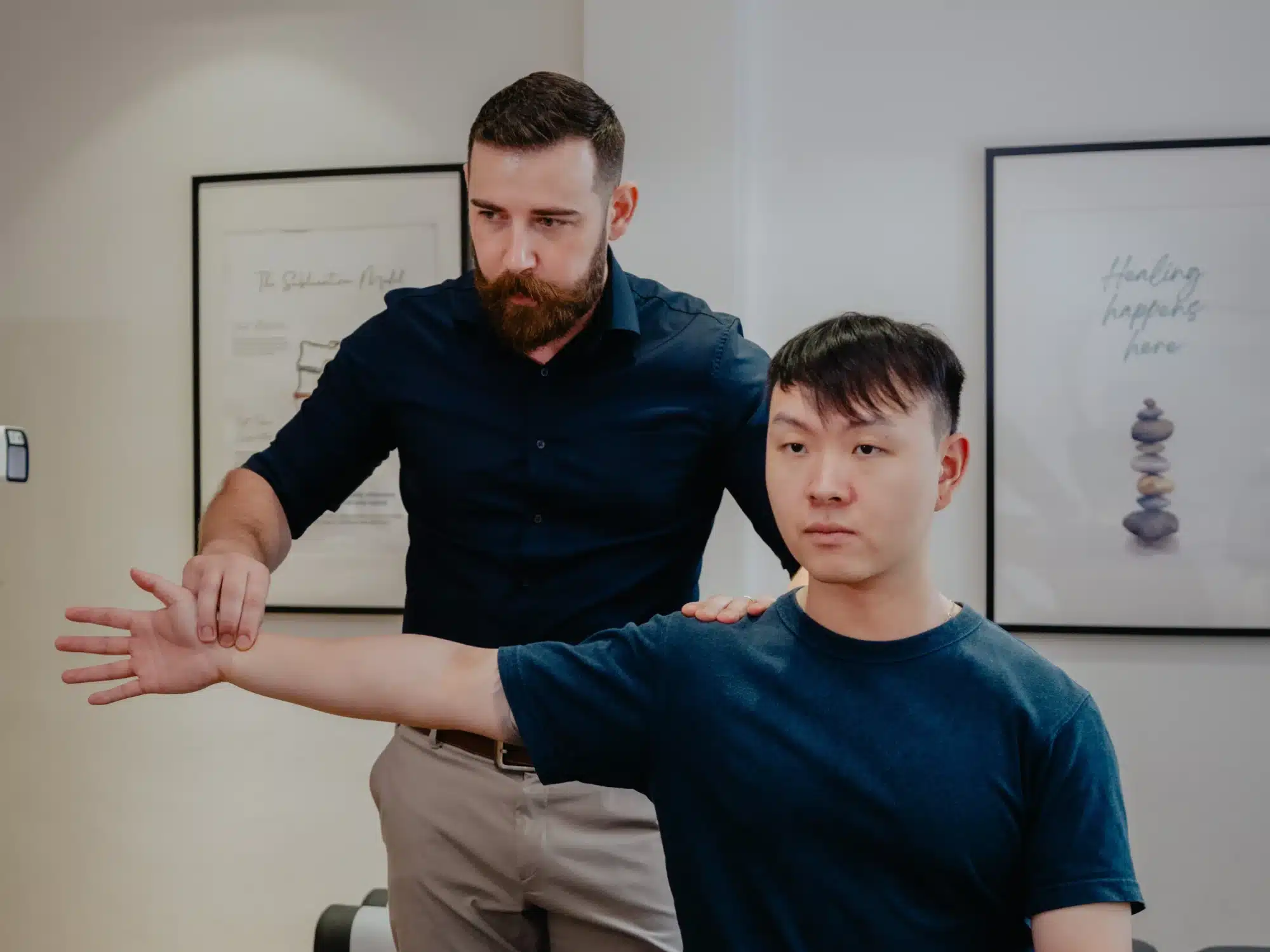
Rest and gradual strengthening heal the muscle itself. Chiropractic care looks at why it was overloaded. Because the iliopsoas attaches to the lumbar spine, a hip flexor problem can feel like lower back pain, and restricted movement in the lower back, pelvis, or hips can change how you run and kick.
- Movement assessment: checks how your lower back, pelvis and hips move to find what overloaded the muscle
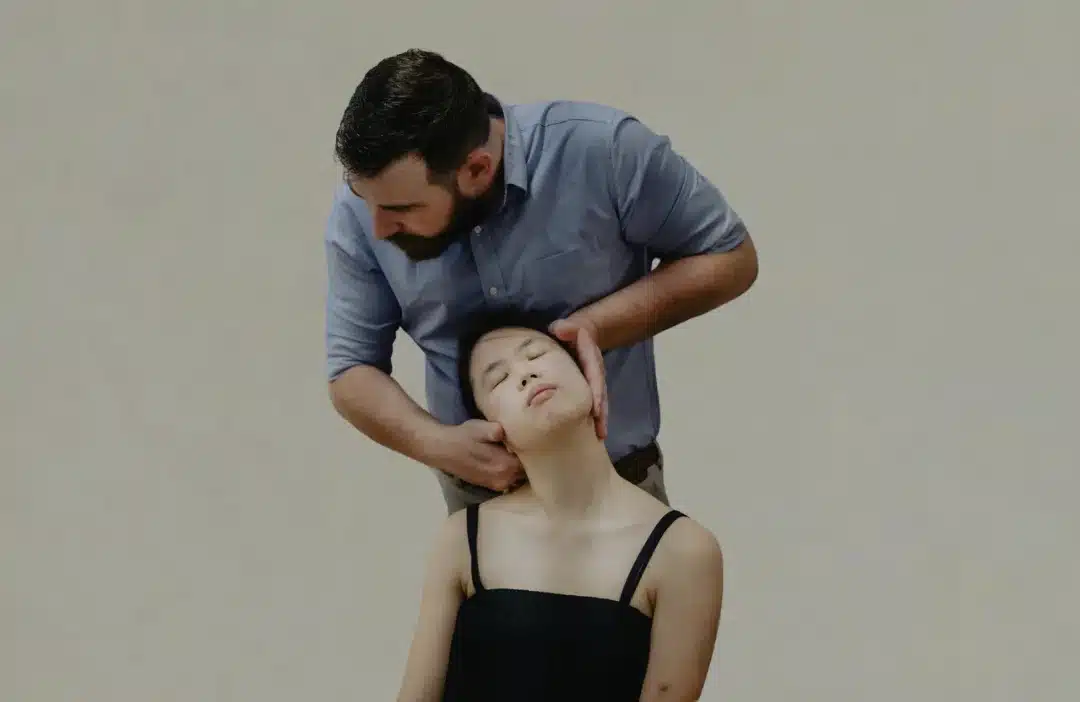
- Joint mobilisation: restores range of motion in the hip, pelvis and lower back without stressing the healing tissue
- Soft tissue work: eases tension in the surrounding muscles once the first 72 hours have passed
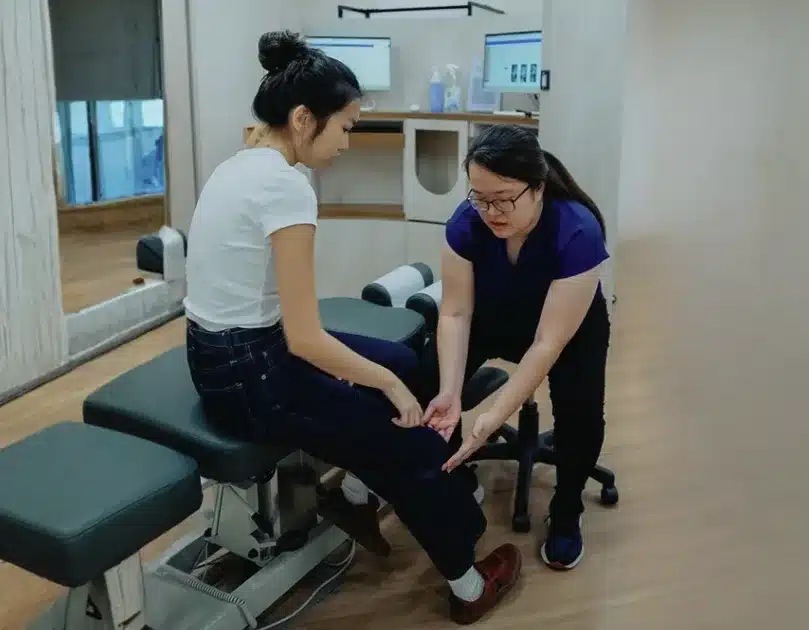
- Rehabilitation plan: sets gradual exercises matched to your recovery phase, including the warm-up movements to restore before you return to sprinting or sport
Book an Appointment with Chiropractic Singapore Today
Taking proactive steps to address your hip pain ensures you can return to your active lifestyle safely and without chronic, lingering discomfort. Do not let a nagging muscle strain dictate your daily activities or lead to ongoing movement compensations.
Our experienced chiropractic team is ready to assess your biomechanics, locate the root cause of your pain, and create a customized recovery plan.
Book your Spinal Check-Up today to start your journey toward optimal health and pain-free movement today.